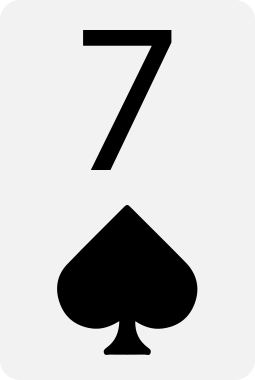
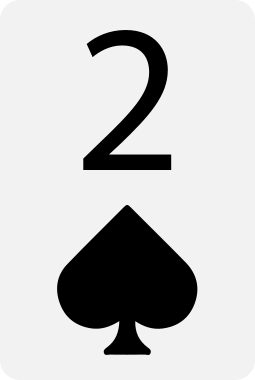
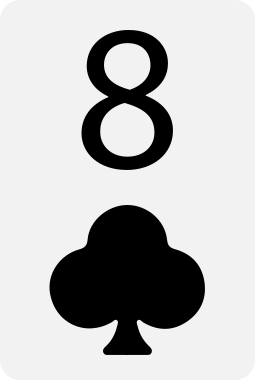
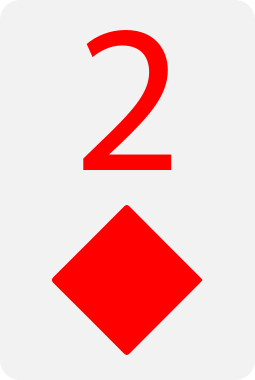
Seven Two Suited occupies a unique place in poker culture and a clear one in poker mathematics. The offsuit version, Seven Two Offsuit, is universally regarded as the worst starting hand in Texas Hold’em, a designation so established that home games frequently attach bonus payouts to winning a pot with it. The suited version is meaningfully better, but only in the specific and limited way that the suit always improves a weak hand. The fundamental problems of low rank, wide gap, and near-complete overcard exposure remain intact. 72s is still one of the weakest hands in the deck. It just has one genuine weapon that its offsuit counterpart entirely lacks.
What These Odds Show for 72s
The draw odds for 72s follow the now-familiar pattern of weak suited hands. The 53.04% miss rate on the flop, 43.67% pair rate by the river, and 22.26% two pair rate are consistent across the entire family of weak suited low hands. The numbers are structurally identical to 82s, 83s, 92s, and 62s, which reflects the mechanical reality that suited hands with similar gaps produce similar draw probabilities regardless of specific ranks.
The straight column is where 72s shows its most significant constraint. A 0.00% straight rate on the flop rising to only 2.49% by the river is the lowest straight completion figure of any hand covered in this series. The two has the narrowest upward connectivity of any card in the deck, and the seven does not extend that range meaningfully. The gap between seven and two is five ranks, and the seven’s straight combinations are limited to three-through-seven and four-through-eight configurations primarily, with the two contributing only through the wheel sequence of ace-two-three-four-five. The 2.49% river rate reflects how rarely both of these paths can be completed given the specific board requirements each demands.
The 0.00% flop straight rate is absolute. There is no three-card combination that completes a straight for 72s on the flop. Unlike 87o, which has a meaningful flop straight rate reflecting open-ended draw completions, 72s cannot complete any straight from three community cards regardless of what they are. Every flop is a miss from a straight perspective, and the hand must rely entirely on flush draws and pair outcomes to have any continuing equity.
The flush column is 6.57% by the river, consistent with all suited hands in this range. The 0.84% flop flush rate and the draw equity of approximately 35% on two-flush flops represent the entirety of what separates 72s from the worst starting hand in the game.
The overcard table tells the starkest story. On the flop, 92.14% of boards contain at least one card higher than the seven. By the river that reaches 98.76%, a figure approached only by the very lowest suited hands. Only a three-rank window sits below the seven, meaning the vast majority of all cards in the deck outrank it, and the two provides no meaningful overcard protection at all.
Hand Strength Summary
- Hand type: Lowest-ranked suited hand with a wide gap
- Relative strength: Bottom two percent of all starting hands, marginally above 72 offsuit
- Dominates: Almost nothing preflop, only the literal mirror hand in a kicker battle
- Main vulnerability: Near-total overcard exposure, no straight draw on any flop, the lowest flush ceiling of any seven-high suited hand
72s is not a hand to look for reasons to play. It is a hand to understand clearly enough to fold efficiently and to recognise the narrow conditions where the flush potential justifies a minimal investment.
How 72s Wins
The flush is the only realistic path to a strong made hand. Completing a flush from 72s is the maximum expression of disguised equity in Texas Hold’em. No opponent at any skill level expects a seven-two in a standard pot, and the psychological impact of showing down a flush with this hand is matched only by its practical effect of extracting chips from opponents who committed on the assumption that no flush was possible. A seven-high flush is among the weakest possible flushes, beaten by any opponent holding an eight or higher in the same suit, but against opponents without a higher flush card it wins cleanly.
Two pair on seven-two boards is the secondary path, though it requires a flop that contains both specific ranks. The implied odds when it does occur are genuine because opponents building on top pair have no reason to account for the two’s relevance until the two pair is revealed at showdown.
The wheel straight is 72s’s most surprising outcome. With a two in hand on a board of three-four-five, the hand can complete the ace-to-five straight when an ace is present, contributing to the straight using the two as a connector alongside the three, four, and five. This is an infrequent and specific outcome, but the shock value of completing the wheel from 72s in a contested pot – particularly against an opponent who has been building on an overpair or a set – is as close to poker poetry as a weak hand gets.
Bluffing is the fourth and arguably most consistent way this hand generates value in aggregate. In late position with initiative, continuation bets on missed boards succeed against opponents who fold unpaired hands and medium pairs, and the suit provides a layer of semi-bluff credibility on two-flush flops that the offsuit version cannot claim.
Main Weaknesses
The seven is the fifth-lowest rank in the deck, and the two is the lowest. Together they create a hand with overcard exposure at 98.76% by the river – the joint highest figure in this series alongside the other very low suited hands. Top pair is a statistical near-impossibility across any meaningful sample of boards, and when the seven does pair it is bottom or near-bottom pair against the overwhelming majority of board textures.
The flush ceiling for 72s is the lowest of any seven-high suited hand. A seven-high flush is beaten by opponents holding any card from eight through ace in the same suit. In any pot with meaningful pre-flop investment or continued multi-street action, the probability that a dominating flush card is present increases substantially.
The straight potential at 2.49% by the river is the lowest in this series. The combination of the two’s narrow upward connectivity and the seven’s limited straight range produces a hand that almost never arrives at a straight and has no path to one on the flop under any circumstances.
Best and Worst Flop Textures
Strong flops
- Two cards of your suit on a low board where opponents are unlikely to hold dominating flush cards
- Seven-two-x boards where the hand makes immediate two pair with complete disguise
- Boards containing three, four, and five that open a wheel draw, particularly with an ace present or likely to come
Dangerous flops
- Any high board without a flush draw, which represents the large majority of all possible flops
- Boards with a single suited card that invite continued investment in a draw that completes roughly 20% of the time from the turn
- Any board where the hand has paired the two against aggression, as bottom pair with no draw is almost always behind
How It Plays by Position
- Late position: The only context where the hand can be played with any reasonable expectation. The flush potential justifies seeing a cheap flop in passive situations where the price is small and the implied odds on a completed flush are large relative to the investment.
- Early and middle position: An unconditional fold. The hand’s weakness across every dimension except the flush draw makes out-of-position play consistently unprofitable. There is no board texture that rewards entering a pot from a positional disadvantage with this hand unless the flush completes, and that happens less than 7% of the time by the river.
- Big blind: Completing against a single very small raise with deep effective stacks is the most defensible scenario for seeing a flop. Against any meaningful raise size or multiple opponents showing aggression, the hand should be folded without hesitation or sentiment.
Common Mistakes with 72s
- Playing the hand more broadly because it is suited – the suited designation does add genuine value, but it does not transform 72s into a speculative hand in the way that 87s or 76s are speculative hands; those hands have connectivity, straight draw potential, and a flush draw, while 72s has only the flush draw with a vulnerable ceiling
- Overcommitting to a completed seven-high flush – against an opponent who has shown strength across multiple streets on a three-flush board, the probability they hold a higher flush card is real, and sizing down or finding a fold is a more sophisticated play than it first appears
- Playing the hand out of position because of its cultural notoriety – the reputation of 72 in poker culture can create a perverse incentive to play it, particularly in casual games, but that incentive is not a strategic one and treating it as broadly playable is a reliable way to lose money
Comparison to Similar Hands
- Stronger than: 72 offsuit, definitively and entirely because of the flush draw
- Weaker than: 73s, 74s, 75s, 76s, 82s, 83s, and every other suited hand in the deck
The comparison to 72 offsuit is the most important one. Seven Two Offsuit has no equity path beyond pairing low cards and has rightfully earned its reputation as the worst starting hand in the game. 72s adds a 6.57% flush completion rate and the ongoing semi-bluff and draw equity that comes with a flush draw on suited flops. That addition is meaningful in specific situations, but it does not change the fundamental assessment of the hand’s weakness.
The comparison to 73s is instructive for understanding how small rank improvements matter. Adding one rank to the secondary card gives 73s marginally better straight connectivity, a slightly higher low-card kicker, and the same flush potential. In practical play both hands belong in the fold most of the time, but 73s is the stronger hand in every measurable category.
How 72s Performs in Multiway Pots
In multiway pots, 72s faces the same amplified problems as all weak suited hands, with the additional concern of its very low flush ceiling. More players in the pot means higher probability that someone holds a dominating flush card in the relevant suit, and the seven-high flush that wins cleanly in a heads-up pot may lose to a hidden higher flush in a three or four-way pot.
The wheel straight and the two pair outcomes retain their disguised value in multiway pots and represent the strongest implied odds scenarios the hand can generate. In a large multiway pot where opponents have committed on the strength of pairs, two pairs, or overpairs, an unexpected wheel or a seven-two two pair can extract disproportionate value relative to the pre-flop investment.
Outside of these specific outcomes, multiway pots should involve minimal investment with 72s. The hand has too narrow a range of strong outcomes and too low a flush ceiling to justify aggressive chip commitment in contested multiway situations.
FAQ: Seven Two Suited
Why is Seven Two Offsuit considered the worst hand in poker?
Because it combines the two lowest meaningful ranks with no suit advantage, producing a hand with the worst pair strength, the lowest straight potential, and no secondary equity path of any kind. It wins almost exclusively through bluffing or when opponents also have weak holdings.
How much better is 72s than 72o?
Meaningfully better in specific situations, modestly better in aggregate. The flush draw adds approximately 35% equity on two-flush flops with two cards to come, which is a genuine and significant improvement. However, the fundamental weaknesses of low rank, wide gap, and overcard exposure remain unchanged.
Is 72s ever worth raising preflop?
Only as a pure bluff in late position against a single opponent in the right conditions. It has no value as a raising hand for value in any standard situation.
What is the significance of the wheel draw with 72s?
The two is the connecting card for the wheel straight, ace-two-three-four-five. On a three-four-five board, 72s makes the straight using the two, though an ace is needed to complete it as the nut low straight specifically. This is the hand’s most surprising and highest-value outcome when it occurs.
Related Hands