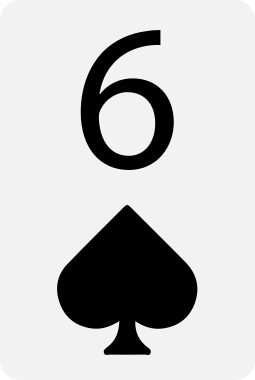
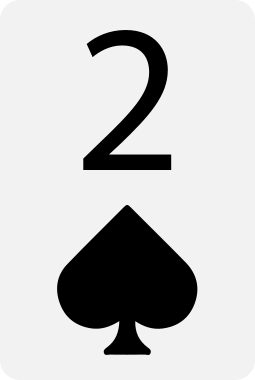
Six Two Suited is one of the weakest starting hands in Texas Hold’em. It combines a low-gap suited connector with two of the least impactful ranks in the deck, and while the flush draw adds a layer of genuine equity that the offsuit version entirely lacks, the hand requires an unusually cooperative board to do anything meaningful. Playing it well is less about finding ways to win and more about understanding when the conditions justify seeing a flop at all.
What These Odds Show for 62s
The draw odds table reflects a hand that starts from a position of significant weakness. On the flop, 62s still has nothing better than high card 52.71% of the time, which is consistent with other unpaired offsuit and suited hands in this range. By the river that falls to 17.84%, but the hands it arrives at are frequently not strong enough to win a contested pot.
The pair rate of 43.00% by the river sounds reasonable until you consider the ranks involved. Pairing a six or a two produces bottom or near-bottom pair in the vast majority of board textures. These are rarely hands you can go to war with.
Where 62s separates itself from its offsuit counterpart is the flush column. A 6.52% chance of making a flush by the river is meaningful, and the 0.84% flop flush rate reflects that on suited boards, this hand arrives at a complete flush on the flop at a non-trivial rate. More importantly, the flush draw itself – present on any two-card suited flop – provides the kind of semi-bluff equity and pot equity that makes speculative hands viable. On a two-flush flop in your suit, you are roughly a 35% favourite to complete by the river with two cards to come, which changes how the hand can be played considerably.
The straight rate of 3.75% by the river is low, which reflects the two-gap and the limited straight combinations available at the bottom of the rank ladder. A six and a two can only contribute to a small number of straights, primarily ace through five with the two acting as a connector and three through seven with the six. That is a narrow window.
The overcard table is where the severity of this hand’s situation becomes clearest. There is a 95.84% chance of an overcard appearing on the flop. By the river that rises to 99.60%, which means in essentially every hand you play with 62s, the board will contain at least one card higher than your six. Top pair is almost never available, and when it is, a six-high top pair is among the weakest possible outcomes in a contested pot.
Hand Strength Summary
- Hand type: Weak suited low connector with a gap
- Relative strength: Bottom tier of all starting hands
- Dominates: Almost nothing preflop
- Main vulnerability: Dominated by virtually every other hand, heavily dependent on flush draws to generate equity
62s is a hand that belongs in the fold most of the time. Its primary value is realised in very specific low-cost situations where the flush draw can be played cheaply and deceptively.
How 62s Wins
The flush is the most reliable path to winning with 62s. Completing a flush from a deceptively low holding is one of the most effective ways to extract unexpected value from opponents who cannot put you on the hand. A player who raised with ace-king and bet three streets on a dry board has no reason to fear a six-two in your hand until the third flush card appears.
Two pair is the other meaningful outcome, particularly on boards like six-x-two where both cards pair simultaneously. At 22.14% by the river, two pair is achievable, though pairing both a six and a two requires a fairly specific board and is vulnerable to anyone holding a higher two pair or better.
The wheel straight deserves a mention here too. With a two in hand, the ace-to-five straight is accessible, and on a board containing a three, four, and five, 62s makes the straight with the two and has a six as an additional blocker to higher straights. This is an infrequent but genuinely disguised outcome.
Bluffing is also part of the 62s toolkit, particularly in late position steal situations on boards where the flush draw is live. Representing a flush draw or a made flush after the third suit card appears is credible regardless of your actual holding.
Main Weaknesses
The rank problem is fundamental and unavoidable. A six and a two are near the bottom of the deck, and neither generates reliable pair strength on a typical board. The 99.60% overcard-by-river figure is not just a curiosity – it is the defining constraint of the hand. You will almost never make top pair, and when you do pair one of your hole cards, it will usually be second, third, or bottom pair against the board.
The gap between six and two also limits straight potential. Unlike a hand such as five-four suited, where the connectivity opens multiple straight combinations, the two-gap here reduces the number of boards that give you a meaningful straight draw.
The flush is the hand’s best feature, but even a completed flush using a six and a two is not the nut flush. Any opponent holding a higher card in the same suit has a better flush, and on certain boards, you can find yourself in a dominated flush situation without realising it until the money is in the middle.
Best and Worst Flop Textures
Strong flops
- Two cards of your suit, opening a flush draw
- Low boards in the three-to-seven range where both hole cards have straight and pair potential
- Six-x-two boards where the hand immediately makes two pair
Dangerous flops
- Any high board where the hand has neither pair nor flush draw, which is the majority of boards
- Boards with a single card of your suit that invite continued investment in a draw that is unlikely to complete
- Paired high boards where the hand has nothing and faces a pot-sized bet
How It Plays by Position
- Late position: The only position where 62s can justify a steal attempt or a limp. The suited nature means that on the right flop the hand can continue profitably, and the price of entry is low enough to be worth taking on passive tables.
- Early and middle position: A straightforward fold. The combination of weak rank, near-certain overcard vulnerability, and the need for a specific flop to continue makes out-of-position play with this hand consistently unprofitable.
- Big blind: Calling a small raise to see a flop is defensible if the price is right, but the hand should be released quickly on any board that does not offer a flush draw or an immediate pair plus draw combination.
Common Mistakes with 62s
- Overcommitting to a flush draw without the correct pot odds – this is not the nut flush draw, and investing heavily on the turn when you might be drawing to a second-best flush compounds the error
- Falling in love with bottom pair – pairing the six or the two on most boards produces a hand that will lose to a significant portion of opponent ranges, and calling bets with no backup draw is a consistent way to lose chips
- Playing the hand from early position because it is suited – the suit adds equity but does not transform a fundamentally weak hand into a playable one from a position of disadvantage
Comparison to Similar Hands
- Stronger than: 62 offsuit, 32s, 42s in most contexts
- Weaker than: 65s, 54s, 53s, any suited connector or one-gap suited hand with higher ranks
The step up to 65s is significant. That hand has genuine connectivity, a meaningful straight draw range, and the same flush potential, making it a legitimately speculative hand in many more situations. Among the very low suited hands, 54s and 53s are substantially more playable because of their straight connectivity and the fact that they can realistically make top pair or second pair on a wider range of boards.
How 62s Performs in Multiway Pots
In multiway pots, 62s benefits from implied odds on its flush draws and disguised two pair or straight hands, while its pair strength becomes even more marginal. When you hit a flush with 62s in a three-way pot, the likelihood that at least one opponent has also connected with the board in a meaningful way increases your potential payoff significantly.
The risk is being drawn into a multiway pot with a marginal draw and facing a raise on the turn that prices you out correctly. In multiway situations, the discipline to fold a flush draw without the right price is important, because the suited nature of the hand can create an emotional attachment to completing it regardless of cost.
FAQ: Six Two Suited
Is 62s ever worth playing?
In very specific situations, yes. In late position with a cheap opportunity to see a flop, or from the big blind completing against a single small raise, the flush potential and disguised hand strength can justify the investment. It is not a hand for raised pots or early position.
How does the flush draw change the hand’s value?
Significantly. The flush draw adds roughly 35% equity on the flop when you have two cards to come, and it provides a credible semi-bluff vehicle. Without it, 62 offsuit is a hand with almost no path to winning.
Can 62s make a straight?
Yes, though infrequently. The most accessible straight is the wheel using ace-two-three-four-five. The six can also contribute to three-four-five-six-seven. Both require specific board cards.
Why is the overcard percentage so high?
Because a six is the fifth-lowest rank in the deck. Almost every card above it – and there are eight of them – can appear as an overcard. With five community cards to come, it is nearly certain that at least one will outrank the six.
Related Hands