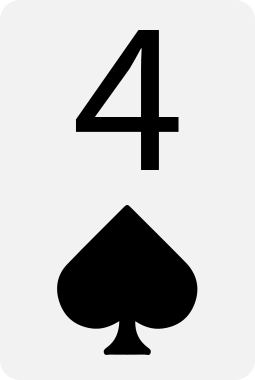
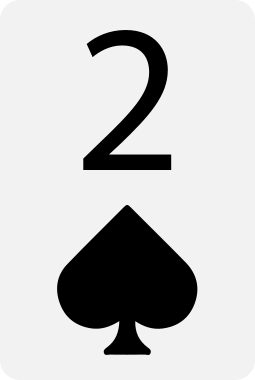
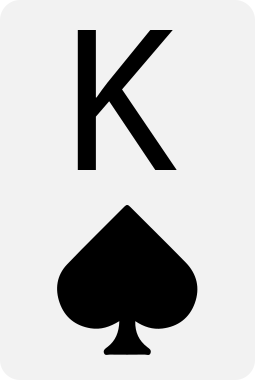
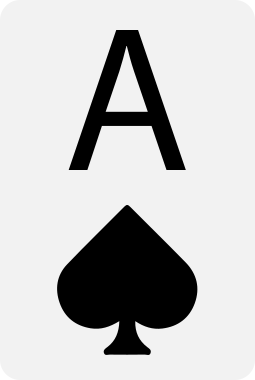
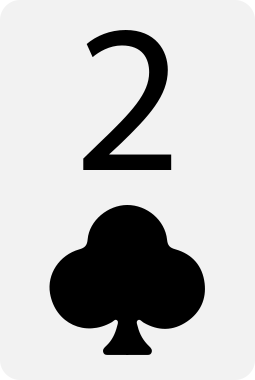
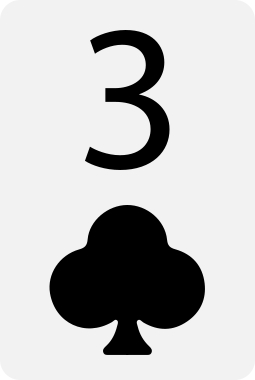
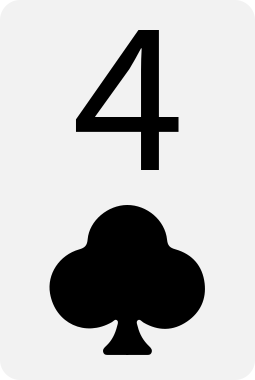
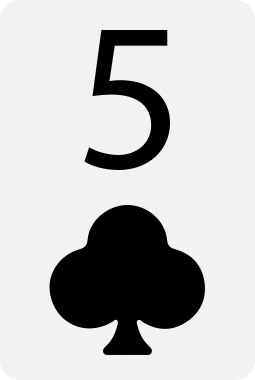
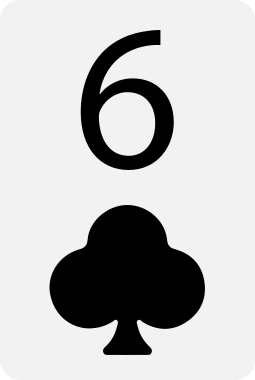
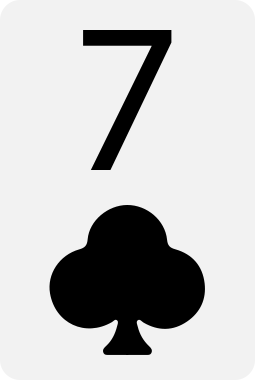
Four Two Suited is one of the weakest starting hands in Texas Hold'em. With a four as its highest card, it sits near the very bottom of the hand hierarchy, holding less high-card value than almost any other starting combination in the deck. Only Three Two Suited carries a lower top card among suited hands, making Four Two Suited a hand that occupies the outermost edges of speculative playability.
What Four Two Suited does have, and what separates it from the genuinely hopeless Ten Three or Ten Four families when those hands are stripped of their straight equity, is a real connection between its two cards. A four and a two are close enough together to share two straights that use both hole cards: the wheel, ace through five, and the six-high straight, two through six. That connectivity is modest compared to suited connectors higher up the deck, but it is real, and it gives the hand a dimension that the wide-gapped ten-high suited hands entirely lack.
What These Odds Show for 42s
The flop high-card rate of 52.39% is consistent with other weak suited hands in this range – the hand misses the flop in the most complete sense more than half the time. By the river that figure settles at 17.36%, which represents runouts where neither card connected with the board in any useful way across all five community cards.
The pair rate on the flop is 40.41%, the same figure shared by most non-pair starting hands. By the river it reaches 42.33%, slightly ahead of Five Two Suited's 42.19% – a marginal difference driven by small variations in how the board interacts with the hand across all possible runouts. As with any hand at this rank, pairing the four is almost without value against a field that has seen any action, while pairing the two is the weakest possible made hand in the game.
The straight odds offer the most meaningful comparison point with adjacent hands. Four Two Suited reaches 5.05% by the river, compared to Five Two Suited's 5.40%. Both hands can make the wheel and the two-through-six straight using both hole cards, but Five Two Suited benefits from additional straights reachable through the five alone – the three-through-seven and four-through-eight straights – while Four Two Suited's four contributes to one fewer such combination. That difference, small as it is in percentage terms, reflects the structural reality that moving from a five to a four as the top card marginally narrows the range of possible straight completions.
The flush odds come in at 6.48% by the river, identical to Five Two Suited. The suited component is suit-determined and rank-independent, so flush equity stays constant regardless of which low ranks the hand holds. The straight flush probability is 0.10% by the river, marginally below Five Two Suited's 0.11%, consistent with the slightly reduced straight equity overall.
The overcard table is where Four Two Suited most clearly distinguishes itself from hands with higher top cards. There is a 99.39% chance of an overcard appearing on the flop, rising to 99.91% by the turn and 99.99% by the river. Practically speaking, this means the four will almost never be the highest card on the board. In an overwhelming majority of hands, every card on the flop will outrank both hole cards. Top pair is not a concept that applies meaningfully to this hand in most runouts – the hand needs to make a flush, a straight, or a two-pair combination from a board that brings lower cards alongside the pair, and those boards are so rare as to be almost hypothetical.
Hand Strength Summary
- Hand type: Weak speculative suited hand
- Relative strength: Second lowest tier among suited hands, above only Three Two Suited in terms of top-card rank
- Best case: Flush, wheel straight, or two-through-six straight in a multiway pot
- Main vulnerability: Near-complete overcard exposure, minimal showdown value without improvement, both cards are among the weakest ranks in the deck
Four Two Suited is a hand that wins by making something, almost always. Holding without improving is not a viable path to a showdown in the vast majority of pots.
How Four Two Suited Wins
The flush is the most reliable premium outcome. Nine cards of the hand's suit remain in the deck when the flop arrives, and when the board delivers three of them, the hand has a live draw to a made flush by the river. A four-high flush is not a strong made hand – it loses to every higher flush – but on boards where no opponent holds a higher flush card in the same suit, it wins at showdown.
The wheel straight is the second and more interesting winning route. Ace through five is the lowest possible straight in poker, but it is still a straight, and the way Four Two Suited makes it is exceptionally well-disguised. An opponent holding a set or top two pair on an ace-low board may never consider that the four and two in your hand have connected with the board's three, four, and five to complete a straight beneath their made hand. The deceptive quality of a wheel made with a four and a two is close to its maximum possible value.
The two-through-six straight is similarly disguised, requiring the board to provide a three, five, and six alongside the hand's four and two. Both straight combinations require very specific board textures, which is why the overall straight equity at 5.05% is modest, but when they do arrive they tend to be extremely difficult for opponents to read.
Main Weaknesses
The four as a top card is the primary structural problem. With a 99.39% overcard rate on the flop, the hand will almost never be in a position where either of its cards is the top pair. Even on the rarest low boards – those featuring a three and a two or a three, two, and another low card – a pair of fours is an extremely marginal made hand.
The two is the weakest possible rank in the deck. As a kicker it is the minimum, and as a made pair it has essentially no independent value. The combination of a four and a two means the hand is entirely dependent on either a flush or a straight to find any legitimate path to the pot.
Unlike the ten-high suited hands where the flush produces a reasonably strong made hand, a four-high flush is vulnerable to any opponent who holds a higher card of the same suit and has also been chasing a draw. Completing the draw and still losing is a real risk that is more pronounced with this hand than with ten- or nine-high flush holdings.
Best and Worst Flop Textures
Strong flops
- Three cards of your suit, giving a flush draw
- Boards containing a three and a five, setting up the wheel draw with one more board card needed
- Boards with a three, five, and six already present, completing the two-through-six straight immediately
- Low boards of small cards that pair either the four or two alongside a flush draw, giving multiple dimensions of equity simultaneously
Dangerous flops
- Any board dominated by mid-range or high cards with no flush draw present
- Boards where the flush draw is live but the suit is one where an opponent likely holds a higher card
- Boards where a straight is possible but requires cards so specific that the implied odds do not justify continuing
How It Plays by Position
- Early position: Should not be played. Four Two Suited has no business being played from any early position in a standard game. The hand needs everything to go right – cheap price, multiway pot, favourable board – and early position is structurally incompatible with all three.
- Middle position: A fold in virtually all circumstances. Even in passive games the hand is too weak to open and too wide-gapped to reliably repay a call.
- Late position: The only home for this hand. In an unopened pot on the button it can function as a steal with the distant backup of occasionally flopping a flush draw or the beginning of a wheel draw. In multiway limped pots seen cheaply it has speculative value.
- Blinds: A free look in the big blind is worth taking – the hand can flop well enough on rare occasions to justify seeing a free flop. Defending against a raise is not correct.
Common Mistakes
The most common mistake is overvaluing a flush draw when the hand is drawing to a four-high flush in a multiway pot. Completing a flush and losing to a higher flush is a pot-sized mistake, and with a four as the highest flush card, any opponent holding a five or higher of the same suit already has a better flush draw. Recognising when the flush draw is not to the best possible flush is essential with this hand.
Another error is chasing any draw without position. Four Two Suited needs to act last or close to last to make sensible decisions about whether pot odds justify continuing. Out of position, every street becomes harder to navigate correctly.
Confusing the wheel draw for a strong draw is also common among less experienced players. Ace through five is a powerful made hand when it completes, but the draw requires a three, a four, and a five on the board alongside the two – three specific cards out of the remaining deck. The implied odds need to be genuinely large to justify aggressive chasing.
Comparison to Similar Hands
Both Four Two Suited and Five Two Suited can make the wheel and the six-high straight. The five has the additional ability to contribute to slightly more straight combinations on its own, which produces the small but measurable difference in straight odds between the two hands.
How Four Two Suited Performs in Multiway Pots
Multiway pots are the natural environment for Four Two Suited, to the extent that it has a natural environment at all. The flush draw pays significantly more in a large pot, and the wheel and six-high straight draws produce hands that are deeply disguised against opponents who have connected with something on a low board.
The four-high flush limitation is a genuine constraint in multiway situations. More players in a pot means a higher probability that at least one opponent holds a higher card in your suit, which increases the risk of making a second-best flush. This is not unique to Four Two Suited, but it is more acute than with higher-ranked suited hands where the flush card has fewer ranks above it.
The wheel draw specifically becomes more valuable in multiway pots because more players connecting with the ace and the low cards of the board means larger stacks going in against a hand that is already made and hidden.
FAQ: Four Two Suited
Is Four Two Suited the worst possible suited hand?
No. Three Two Suited carries a lower top card and is marginally weaker in terms of high-card value. Four Two Suited is above only that hand in terms of top-card rank among suited holdings. Both are genuinely weak, but both have straight drawing potential that wide-gapped hands at higher ranks often lack.
Can Four Two Suited make the wheel?
Yes. Ace through five – A-2-3-4-5 – is a straight that uses both hole cards. It requires the board to provide an ace, a three, and a five, but when those cards arrive, the hand has made the lowest possible straight in a completely disguised way.
How does the four-high flush compare to higher flush draws?
It is the second-weakest possible flush draw, above only a three-high flush draw from Three Two Suited. Any opponent holding a five or higher of the same suit already has the higher flush draw. This makes it important to assess opponent likelihood of holding higher suited cards before committing to the draw across multiple streets.
Is Four Two Suited ever a legitimate play in tournament poker?
In very specific tournament spots – extreme late position with a big stack advantage, short-handed play, or situations where seeing a cheap flop in a multiway limped pot has meaningful implied odds – it has occasional speculative value. It is not a hand that belongs in a standard opening range at any stage.
Related Hands