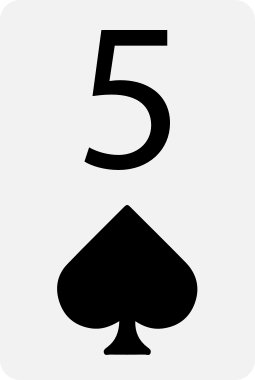
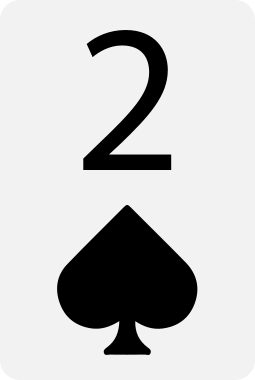
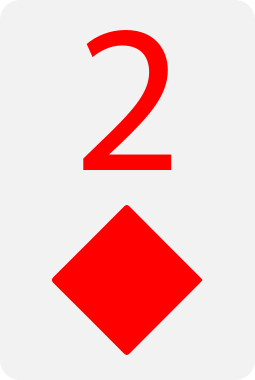
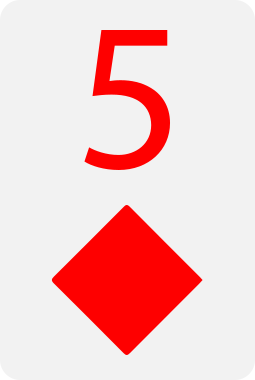
Five Two Suited is one of the weakest starting hands in Texas Hold'em. It sits at the very bottom of the hand rankings, combining a low rank gap, no high-card value, and limited straight potential. Its only genuine redeeming quality is that both cards share a suit, giving it a route to the occasional flush or straight flush that the offsuit version entirely lacks.
This is not a hand you play for raw strength. It is a speculative hand, played selectively in the right conditions for its ability to disguise itself and occasionally produce an unexpected made hand that is very difficult for opponents to put you on.
What These Odds Show for 52s
The draw odds table tells a clear story. On the flop, Five Two Suited arrives as a high card hand more than half the time, at 52.39%. That means in the majority of runouts, the flop changes nothing and you are holding little more than five-high. By the river, that figure drops to 17.14%, but only because the hand has had more opportunities to connect, not because it starts from a position of strength.
Pairing up is the most common outcome, with a 40.41% chance of making at least one pair on the flop. However, pairing a five or a two creates a very weak made hand with little protection and limited ability to withstand aggression. By the river, the pair rate sits at 42.19%, making it the most likely final hand type by a wide margin, which underlines how often this hand fails to develop into anything more threatening.
The straight odds are modest. By the river there is a 5.40% chance of making a straight, which reflects the hand's limited connectivity. A five and a two can contribute to a wheel straight using ace through five, or a six-high straight using two through six, but that is where the range of viable straight combinations ends. Compare this to more connected hands where straight equity is meaningfully higher.
The flush is actually the more likely premium outcome, coming in at 6.48% by the river. This is the suited premium and the main reason to prefer the suited version of this hand over its offsuit counterpart. It is not a large number in absolute terms, but it is enough to give the hand occasional big-hand potential in the right spot.
The overcard table is about as extreme as it gets. There is a 98.14% chance of an overcard appearing on the flop, rising to 99.91% by the river. This is expected given how low both cards are, but it serves as a useful reminder that Five Two Suited will almost never have top pair and will frequently be dominated by whatever the board brings.
Hand Strength Summary
- Hand type: Speculative suited two-gapper
- Relative strength: Bottom tier of all starting hands
- Best case: Flush, straight, or straight flush in a multiway pot
- Main vulnerability: Virtually everything – high-card weakness, low connectivity, minimal showdown value
Five Two Suited is not a hand that wins by dominating. On the rare occasions it does win, it tends to win big, because the hands it makes are unexpected and well-disguised.
How Five Two Suited Wins
This hand wins in a small number of specific ways. It flops a flush draw and gets there by the turn or river. It makes a wheel straight on a board that gives opponents strong but second-best hands. It hits two pair or trips on a low board and extracts value from opponents who over-played top pair. And occasionally, in the right conditions, it makes a straight flush and wins a pot far larger than its preflop reputation would suggest.
The key theme is deception. Because no opponent expects much from this holding, the rare times it makes a strong hand, the disguise is near-perfect.
Main Weaknesses
The weaknesses of Five Two Suited are numerous and significant. The hand has almost no high-card value, meaning it rarely wins at showdown unimproved. With 98% of flops bringing at least one overcard, top pair is essentially never available. Even when it pairs, a pair of twos or fives is among the weakest possible made hands. The straight potential is narrow, limited to just two possible straights rather than the wider range available to mid-connected hands. And while the flush draw is real, a five-high flush, if it gets there, can still be beaten by a higher flush.
Best and Worst Flop Textures
Strong flops
- Low boards pairing the five, the two, or both
- Boards with three to four low cards creating straight or flush draw equity
- Boards that are heavily suited in your suit, giving you a flush draw immediately
Dangerous flops
- High boards where you have missed entirely and hold no draw
- Boards that pair high cards, making top pair for opponents who are likely to call or raise
- Boards where your flush draw is present but low, leaving you vulnerable to a higher flush if it completes
How It Plays by Position
- Early position: Five Two Suited should rarely if ever be played from early position. The hand needs a cheap price, favourable pot odds, and ideally multiple callers. Playing it from under the gun invites isolation from better hands.
- Middle position: Still a fold in most circumstances. There are occasional spots in loose passive games where speculative suited hands gain value, but in most mid-position scenarios the risk outweighs the reward.
- Late position: The best place to consider playing Five Two Suited. Folded to you on the button or cutoff, it has some playability as a steal or speculative limp in multiway pots.
- Blinds: In the big blind with a cheap or free flop already secured, this hand can be seen cheaply. Defending the small blind against a raise, however, is rarely correct.
Common Mistakes
The most common mistake with Five Two Suited is overvaluing the suited component. Being suited adds value, but it does not transform a fundamentally weak hand into a strong one. Many players see the two matching suits and overestimate how often they will make a flush and how much that flush will be worth when they do.
Another frequent error is continuing past the flop without a strong draw or a made hand. Pairing a two or a five against a board with overcards and action is not a reason to continue. The hand needs to connect well to be playable on any street after the flop.
Finally, players sometimes call preflop raises with Five Two Suited from out of position, removing the one structural advantage this hand occasionally has – the ability to see a cheap flop and get away cheaply when it misses.
Comparison to Similar Hands
The suited component gives it a small edge over its offsuit equivalent, but it remains one of the hardest hands in the deck to play profitably over the long term.
How Five Two Suited Performs in Multiway Pots
Paradoxically, Five Two Suited performs relatively better in multiway pots than in heads-up situations. This is because its big-hand equity – flush draws, straights, and two pair combinations – becomes more valuable when there are more players contributing to the pot. In a large multiway pot, hitting a flush or a straight delivers a much larger payout relative to the small preflop investment. The hand also benefits from the fact that low boards that connect with it tend to be less threatening to players holding broadway cards, encouraging more action against you when you are strong.
FAQ: Five Two Suited
Is Five Two Suited ever worth playing?
In the right conditions, yes. A cheap multiway pot in late position where the implied odds justify seeing a flop can make it a marginal play. It is never a hand you build a strategy around, but it has occasional speculative value.
What is the best possible hand Five Two Suited can make?
The straight flush using ace through five, also known as a steel wheel, is both the strongest hand it can make and one of the most powerful hands in poker. It is extremely rare, but it does happen.
Does being suited make a big difference to Five Two?
It adds value, primarily through flush equity and the small but real straight flush possibility. The overall win rate of the hand is still very low, but the suited version is meaningfully better than the offsuit version in the spots where it does connect.
Why do some players never fold Two Five Suited?
The hand has a cult following in certain player communities because of how dramatically it can win when it connects. The surprise factor and the ability to stack opponents with disguised hands makes it memorable. That does not make it profitable to play regularly.
Related Hands