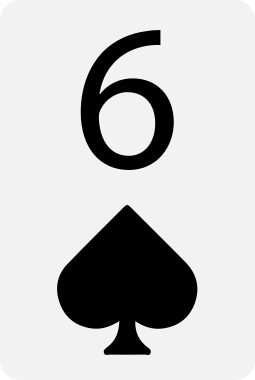
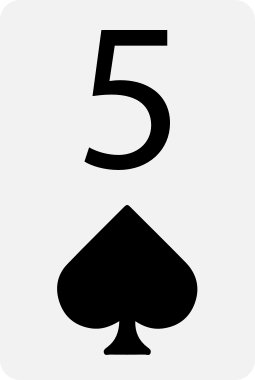
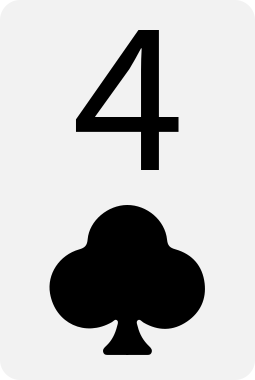
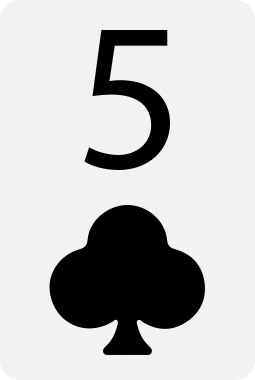
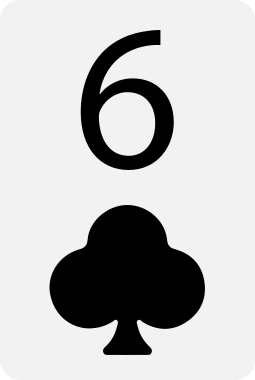
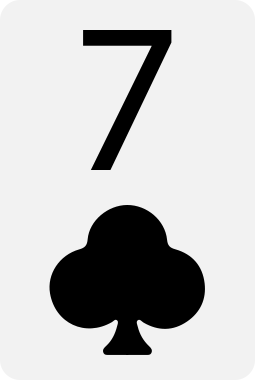
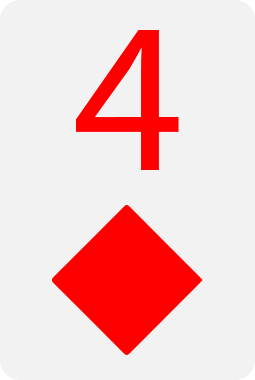
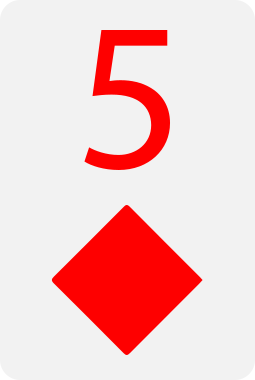
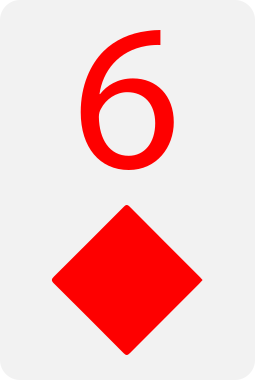
Six-Five Suited is one of the most connected low suited connectors in Texas Hold’em. It is a pure drawing hand with no pretensions about high-card strength, but what it lacks in that department it more than makes up for in straight potential and disguise. Players who understand implied odds and post-flop play tend to have a lot of affection for 65s, and the numbers justify why.
The hand is a zero-gap suited connector, meaning both cards are adjacent in rank. That gives it the maximum number of straight combinations available for cards at this level, and being suited adds flush equity on top. When 65s hits, it tends to hit hard and in ways that are difficult for opponents to read.
What These Odds Show for 65s
The most striking number on this page is the overcard table. At 95.84% on the flop, 98.67% by the turn, and 99.60% by the river, an overcard is almost a certainty on every single street. This is a hand that will almost never have the best high card on the board, and that is simply a fact of life you accept when playing it. The entire strategy around 65s is built on this reality – you are not trying to win with top pair, you are trying to make a straight or flush that beats whatever high-card hand your opponent is proud of.
The straight odds reflect the hand’s connectivity clearly. A 1.29% chance of flopping a straight outright, rising to 8.57% by the river, is the strongest straight draw equity you will see from a hand in this rank range. Compare this to the 86s straight odds of 7.27% by the river – 65s edges it out thanks to its zero-gap structure giving one additional straight combination. The straight flush odds of 0.20% by the river are also slightly elevated compared to similar hands, a product of that same connectivity.
Flush equity runs close to 86s at 6.38% by the river, consistent with what you would expect from any suited hand at this level.
Hand Strength Summary
- Hand type: Suited connector (zero-gap)
- Relative strength: Speculative, but among the better low suited connectors
- Main draws: Straights (maximum combinations for this rank), flushes, straight flushes
- Main vulnerability: Virtually guaranteed overcards on every street; no high-card fallback whatsoever
How 65s Wins
- Completing straights, which are well-disguised at this rank
- Completing flush draws
- Flopping two pair using both hole cards on connected boards
- Applying pressure through combination draws (open-ended straight draw plus flush draw simultaneously)
- Taking down pots as a bluff or semi-bluff when a scare card lands
The combination draw is where 65s truly shines. When you flop both an open-ended straight draw and a flush draw together, you can have upwards of 15 outs, making you a favourite or near-favourite even against a made hand.
Main Weaknesses
- Among the lowest high-card ceilings of any playable hand
- Overcards on the board are essentially guaranteed, as the table confirms
- Straights made at this rank can be beaten by higher straights using just one opponent card
- Flush draws vulnerable to higher flush draws from opponents holding one higher card of the same suit
- Easily priced out if preflop investment is too large
Best and Worst Flop Textures
Strong flops
- Directly connected mid-low boards (7♣ 4♦ 3♣ or 8♥ 7♦ 4♣) giving open-ended straight draws
- Boards pairing one of your cards with draw equity available (6♦ 9♥ 7♣)
- Two-tone flops in your suit with straight draw potential alongside
Dangerous flops
- High disconnected boards (A♣ K♦ 9♣) – no equity whatsoever
- Boards that complete straights using higher connectors, leaving you drawing to the low end
- Monotone flops in a suit you do not hold
How It Plays by Position
- Early position: Not a hand to open from early position in most games; the post-flop disadvantage of being out of position is too costly
- Middle position: Marginal; best reserved for looser tables where multiway pots are likely
- Late position / button: An excellent hand to open or overcall with; the combination of steal equity and post-flop potential makes it very playable
- Blinds: A solid defend from the big blind against a single raiser, particularly when the raiser is on the button and pot odds are favourable
Common Mistakes
- Calling raises from early position out of position, destroying the implied odds model
- Continuing on flops with no pair, no draw, and no backdoor equity
- Drawing to the low end of a straight (the ignorant end) without recognising the risk
- Overestimating flush draw value when a higher card of your suit is likely in an opponent’s hand
- Treating it like a hand that can win unimproved at showdown
Comparison to Similar Hands
- Stronger than: 65o (the suited nature adds significant equity), 54s (slightly weaker straight range)
- Weaker than: 76s, 87s (higher rank gives more fallback equity and stronger straights)
- Very similar in structure to: 76s but operating one rung lower on the rank ladder, which materially increases overcard exposure as the table shows – 95.84% vs the lower figures you see for higher connectors
How 65s Performs in Multiway Pots
65s is one of the hands that most actively benefits from multiway pots preflop. More players mean larger implied odds when straights and flushes complete, and the disguised nature of low straight draws means opponents are less likely to put you on the nuts when you get there.
The risk in multiway pots is on the draw side. With more players, the chance that a higher flush draw is out there increases, and low straights are more vulnerable to being beaten by the higher end. Managing this requires reading the board carefully for whether you are drawing to the nuts or drawing to a second-best hand.
FAQ: Six-Five Suited
Is 65s better than 86s?
They are similar in character but different in emphasis. 65s has superior straight combinations due to its zero-gap structure, reflected in the higher river straight odds of 8.57% versus 7.27%. However, 86s has a slightly higher high-card ceiling, meaning it has marginally more fallback equity when draws miss. Neither is strictly better – they suit different situations.
How do you handle the near-certain overcards with 65s?
You accept them as part of the hand’s identity. The overcard table showing 99.60% by the river is not a problem to solve – it is a condition to play around. Your goal is never top pair with 65s; it is straights, flushes, and two pair from connected boards.
Should you ever slow play a flopped straight with 65s?
Rarely. Flopped straights with low connectors are vulnerable to the board pairing (counterfeiting two pair or full house draws for opponents) and to flush draws completing. Getting value in immediately is usually correct.
What is the ignorant end of a straight and why does it matter with 65s?
If the board shows 7-8-9 and you hold 65, you have made a straight – but any opponent holding T-J has a higher straight and beats you. Drawing to or making the low end of a straight is a common trap with low connectors, and 65s is particularly exposed to it given its rank.
Related Hands