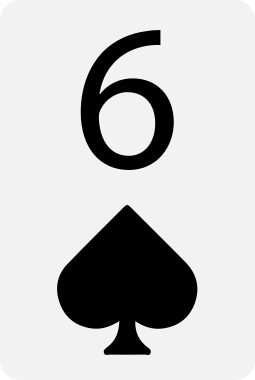
Six Five Offsuit is a low one-gap connector that shares its straight potential with 87o and 76o while sitting at the bottom of the rank ladder among playable connectors. The connectivity between the six and five produces the same 9.13% straight completion rate by the river as its structural equivalents higher up the rank scale, which is the hand’s primary and essentially only source of post-flop equity. Everything else about 65o points toward weakness. The ranks are low, the overcard exposure is near-total, the pair strength is negligible, and the offsuit nature removes the flush draw that makes 65s a genuinely interesting speculative hand. Understanding 65o means understanding the ceiling that rank position places on connectivity.
What These Odds Show for 65o
The straight column is the headline number and the reason 65o merits any discussion at all. A 1.31% flop straight rate rising to 4.36% by the turn and 9.13% by the river is consistent with 87o and 76o, confirming that one-gap connectivity produces equivalent straight draw equity regardless of rank position. The 9.13% figure is marginally higher than both of its structural equivalents, reflecting the six and five’s slightly broader access to low straight combinations. The ace-through-five wheel is accessible using the five as a connector, adding a straight combination that 87o and 76o do not have available, and this contributes the small additional percentage over the river.
The flop straight rate of 1.31% reflects immediate completions, meaning boards like two-three-four or three-four-seven where the hand makes a straight outright on the first three community cards. These are narrow but real scenarios, and on boards like four-seven-x or three-four-x or two-three-x the hand frequently has an open-ended draw with eight outs rather than a made straight, which is a meaningful continuation equity situation.
The pair rate of 42.73% by the river matches 87o and 76o exactly, but the pair strength of 65o is meaningfully weaker in most practical situations. Pairing the five produces bottom pair on essentially every board. Pairing the six is marginally better but still bottom or near-bottom pair against the vast majority of realistic flop textures given the severe overcard exposure.
The overcard table is where 65o diverges most sharply from 87o and aligns more closely with the weakest hands in this series. On the flop, 95.84% of boards contain at least one card higher than the six, rising to 99.60% by the river. These are the same figures as 62s, reflecting the six’s position near the bottom of the rank hierarchy. By the river, in essentially every hand played with 65o, the board will contain at least one card that outranks the six. Top pair is a statistical near-impossibility, and the hand must win through the straight or not at all in any meaningful pot.
Hand Strength Summary
- Hand type: Low one-gap offsuit connector
- Relative strength: Bottom tier overall, strongest within the narrow category of very low offsuit connectors
- Dominates: Almost nothing preflop
- Main vulnerability: Near-complete overcard exposure, negligible pair strength, no flush draw, entirely dependent on straight draws to generate post-flop equity
65o is a hand with a clear and singular purpose. It enters pots to make straights. Any other outcome is either a fold or a bluff, and distinguishing clearly between those two responses on non-straight boards is the entire skill of playing the hand.
How 65o Wins
The straight is the dominant and essentially exclusive path to winning a meaningful pot with 65o. At 9.13% by the river, and with frequent open-ended draw equity on connected boards, the hand generates genuine equity on a specific range of flop textures that justifies its existence as a late-position speculative holding. The combination of six and five covers several straight configurations. Three-four-x gives an open-ended draw to the two and seven. Four-seven-x gives an open-ended draw to the three and eight. Two-three-x gives a draw to the four completing a wheel-adjacent straight. Seven-eight-x gives a gutshot to the four or an open-ended draw depending on the configuration. On the right board, 65o has eight clean outs and approximately 32% equity with two cards to come.
The disguise factor of 65o straights is among the highest of any holding in the deck. A player holding six-five in a pot where an opponent has built on pocket aces, pocket kings, or ace-king is completely invisible until the straight completes. The implied odds from opponents who cannot release strong one-pair or overpair hands against a board that does not appear threatening are consistently the largest single source of value this hand produces.
The wheel straight deserves specific mention. With a five in hand, boards containing ace, two, three, and four create the ace-to-five straight with the five as the key connector. This is a narrow but genuine outcome, and it is more accessible for 65o than for higher connectors like 87o or 76o because the five sits naturally within the wheel range. The six also contributes to wheel-adjacent combinations through two-three-four boards where it can extend the straight in the other direction.
Two pair on six-five boards is the secondary path. Immediate two pair on six-five-x boards provides a disguised strong holding, and opponents building on top pair or overpairs have no reason to account for the five until the two pair becomes relevant.
Bluffing and late-position steal attempts round out the winning scenarios. The hand is not a premium steal candidate, but in the right table dynamics with passive opposition, a pre-flop raise from the button or cutoff can win the blinds often enough to contribute meaningfully to the hand’s overall value.
Main Weaknesses
The overcard exposure at 99.60% by the river is the defining constraint of 65o. Shared with 62s at the other end of the six-x range, this figure reflects that six ranks sit above the six in the deck, and with five community cards to come, at least one of them appears on the board in virtually every hand. Top pair is essentially unavailable, and when the six does pair it is bottom pair against almost every realistic board texture. The hand cannot win through high-card strength or reliable pair value under any ordinary circumstances.
The offsuit nature is the most significant structural weakness relative to the hand’s potential. 65s is a genuinely interesting speculative hand because it combines one-gap connectivity with flush draw equity, creating combined drawing situations with fifteen or more outs on certain two-tone boards and enabling semi-bluff aggression on suited flops. 65o has none of these secondary equity paths. When the straight draw is not live, the hand has a pair of fives or sixes that cannot withstand any meaningful aggression, and there is nothing else available.
The rank position also limits the straight’s practical value in a way that is easy to overlook. When 65o completes a straight, it is rarely the nut straight. Boards that give 65o a straight frequently give higher hands better straights. On a four-seven-eight board, 65o has a straight through four-through-eight but any player holding nine-six or nine-five has a higher straight, and a player holding nine-eight has an open-ended draw to beat it. Reading the board for straight-over-straight possibilities is more important with low connectors than with higher ones.
Best and Worst Flop Textures
Strong flops
- Three-four-x boards giving an open-ended draw to the two and seven
- Four-seven-x boards providing an open-ended draw structure with genuine implied odds
- Two-three-x boards opening a wheel draw or completing it outright
- Six-five-x boards making immediate two pair
- Low boards generally in the two-through-eight range give the hand its best opportunity to generate straight draw equity
Dangerous flops
- Any high board without a connected structure in the four-through-eight range, which represents the majority of all possible flops
- Boards with face cards and no low connectivity
- Any board where the hand has paired the five and faces aggression, as bottom pair with no draw is an immediate fold in most situations
- High boards with a flush draw texture where the hand has nothing and cannot credibly represent any strong holding
How It Plays by Position
The positional requirements for 65o are stricter than for any one-gap connector reviewed earlier in this series precisely because of the rank position. With 87o, a missed board at least offers the possibility of a credible continuation bet representing top pair on an eight-high board. With 65o, virtually no board allows a pair-based continuation bet to be credible, and the hand is entirely dependent on a connected board texture to continue.
- Late position: The only context where 65o is genuinely playable. From the cutoff or button in an unopened pot, the combination of straight potential and the ability to see a cheap flop and fold quickly on a miss can produce a profitable line in the right table conditions. Against passive opposition who folds to continuation bets frequently, the hand also has steal equity in the right spots.
- Early and middle position: A fold. The pre-flop price is almost never low enough relative to the implied odds to justify entering with a hand that misses the vast majority of flops and cannot fall back on pair strength when it does.
- Big blind: Completing against a single very small raise is defensible only with deep stacks that amplify the implied odds on a completed straight. Against any meaningful raise size, folding is the correct response, as the pre-flop investment reduces the overall profitability of the draw below the threshold where it becomes worthwhile.
Common Mistakes with 65o
- Overvaluing the straight potential without accounting for rank-based straight vulnerabilities – low straights are frequently vulnerable to higher straights, and stacking off with a six-high straight on a board that offers better straights to opponents holding sevens, eights, or nines is a situation that occurs more frequently with 65o than with higher connectors
- Continuing with bottom pair plus a backdoor draw – when the board does not connect with a live straight draw, 65o has no meaningful showdown value and should be folded to any aggression; the temptation to continue with a pair of fives and a backdoor straight draw is a consistent leak
- Playing the hand from out of position and calling bets on a connected board without the correct pot odds – out of position with a drawing hand every decision requires accurate pot odds assessment, and calling a large continuation bet with four outs to a gutshot is a negative expectation play regardless of how connected the board feels
Comparison to Similar Hands
- Stronger than: 64o, 63o, 62o, 54o in some straight configurations, any offsuit hand with lower ranks or wider gaps
- Weaker than: 65s, 76o, 87o, 54s, any suited connector or one-gap suited hand in this range
The comparison to 76o is instructive. Both hands have near-identical straight potential, but 76o benefits from the seven as the high card rather than the six, producing marginally lower overcard exposure at 92.14% on the flop versus 95.84% for 65o. In practice both hands are treated similarly, but 76o has a slightly broader range of boards where it can make a credible pair play.
The comparison to 65s illustrates the full cost of the offsuit nature. 65s adds flush draw equity that creates combined drawing hands with substantial equity on two-tone boards, enables semi-bluff continuation, and makes the hand genuinely playable in a range of situations where 65o is a fold. Among low one-gap connectors, the suited version is considerably stronger, and the improvement is larger here than for higher-rank connectors because 65o has so few alternative equity paths to compensate.
How 65o Performs in Multiway Pots
In multiway pots, 65o has the same implied odds amplification as all speculative connectors while adding the specific risk of straight vulnerabilities that are more pronounced at lower ranks. A completed straight in a three or four-way pot extracts the largest payoffs this hand can generate, but in multiway pots on boards that give 65o a straight, the probability that at least one opponent holds a higher straight is meaningfully elevated compared to higher connectors.
The two pair outcome in multiway pots retains its disguised value. On six-five boards with multiple opponents, the hand can extract chips from opponents building on top pair or overpairs who do not account for the five’s relevance. This is the most consistent non-straight value scenario in multiway contexts.
The general principle for 65o in multiway pots is the same as for all low offsuit connectors in this series. See cheap flops, continue only with genuine draw equity or made strong hands, fold quickly on misses, and size down investment on all streets when the straight draw is only a gutshot rather than an open-ended draw.
FAQ: Six Five Offsuit
Why is 65o’s straight rate marginally higher than 87o and 76o?
The five’s proximity to the wheel straight range adds a small number of straight combinations that the higher connectors cannot access. Boards containing ace, two, three, and four create wheel-adjacent straights that use the five as a natural connector, and boards like two-three-four give an immediate straight completion that is outside the range of 87o and 76o entirely.
Is 65o playable at all?
In late position with no prior action and passive table dynamics, yes. The straight potential and implied odds on connected boards justify a cheap flop in the right conditions. In most other contexts it is a fold.
How does 65o compare to 65s in practical terms?
65s is significantly stronger. The flush draw adds an equity path that transforms the hand’s playability in multiway pots and on two-tone boards, creates semi-bluff opportunities, and enables continued investment on boards where 65o has nothing but a draw. The suited version is a genuinely speculative hand; the offsuit version requires strict discipline.
What is the biggest risk when 65o completes a straight?
Being beaten by a higher straight. Low straight completions are more vulnerable than high ones because more opponent holdings can have straights that rank above a six-high or five-high straight. On boards like three-four-seven, a player holding eight-six or eight-five has a higher straight, and reading the board for these vulnerabilities is essential before committing heavily.
Related Hands