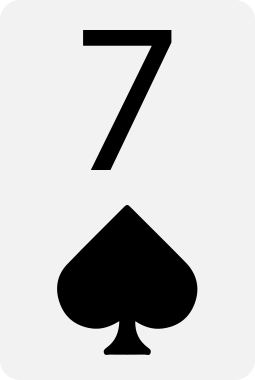
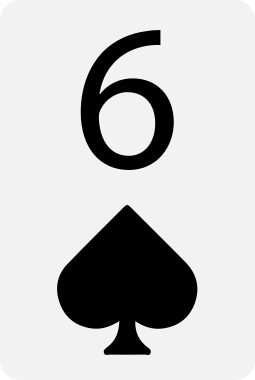
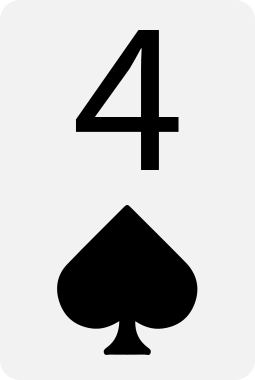
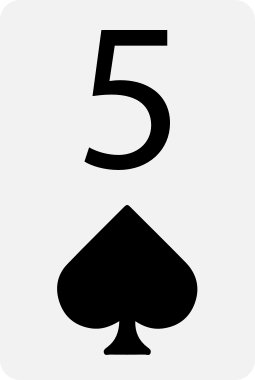
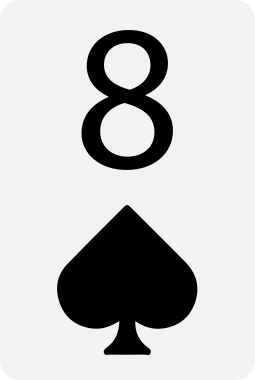
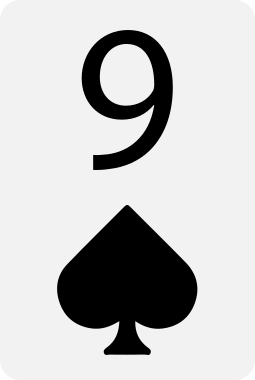
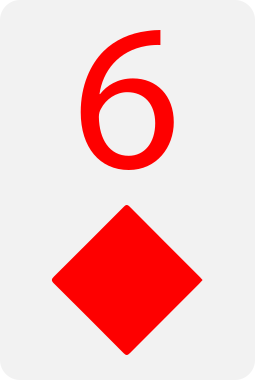
Seven Six Suited is one of the most well-regarded suited connectors in Texas Hold’em, and the draw odds table explains why. It combines straight draw potential, flush draw potential, and straight flush possibility into a hand that is genuinely dangerous on a wide variety of board textures. It has no high card strength to speak of, but it does not need it — the hand is built entirely around drawing equity and deception.
Among mid-low suited connectors, 76s is widely considered the benchmark. Hands above it gain high card strength; hands below it lose connectivity. This is close to the sweet spot.
What These Odds Show for 76s
The straight odds are the standout figure. At 1.29% on the flop, rising to 8.53% by the river, 76s produces the highest straight probability of any hand covered in this series so far. The Seven-Six combination creates open-ended straight draws on a wide range of board textures — any flop containing a Five and Eight, Four and Eight, Four and Five, Eight and Nine, or Five and Nine gives the hand meaningful straight equity. Many of these draws are open-ended with eight outs, and some board textures produce draws with additional outs through pair equity simultaneously.
The flush odds contribute a further 6.38% by the river, and the straight flush figure of 0.20% is the highest seen in this series — a reflection of how naturally the hand combines both drawing dimensions at once. When 76s flops both a straight draw and a flush draw simultaneously, it is one of the most powerful drawing hands in poker regardless of its rank.
The high card figure of 51.75% on the flop falling to 15.94% by the river is among the lower river high card rates seen, consistent with a hand that connects with the board across a wide range of runouts.
The overcard table shows 92.14% on the flop, rising to 98.76% by the river. Any Eight through Ace is an overcard to the Seven, which is most of the deck. This confirms that pair equity with 76s is unreliable and should not be the primary plan — the hand wins through draws completing, not through pairing and holding.
Hand Strength Summary
- Hand type: Mid-low suited connector
- Relative strength: Strong speculative hand; one of the most complete drawing hands in the mid-low range
- Strengths: Highest straight potential of hands in its tier, meaningful flush equity, genuine straight flush potential, excellent deception
- Main vulnerability: No high card strength, pair equity unreliable with nearly certain overcards, requires implied odds to justify preflop investment
How Seven Six Suited Wins
76s has multiple well-defined paths to winning:
- Completing a straight on a board where opponents hold top pair, two pair, or an overpair and cannot fold
- Completing a flush in a pot where opponents have committed chips with strong but second-best hands
- Flopping a combination draw — straight draw and flush draw simultaneously — and either semi-bluffing to take the pot or completing one of the draws
- Making two pair or a set in spots where the board texture disguises the holding and opponents overvalue their own hand
- Winning small pots with well-timed continuation bets on boards where the draw equity provides sufficient backup if called
Main Weaknesses
- Overcards appear on nearly every board — 98.76% by the river — making pair-based holdings almost entirely unreliable
- The hand has no standalone high card value and is entirely reliant on improving to compete at showdown
- Draws do not complete the majority of the time; the hand requires discipline to fold when equity is not present and pot odds do not justify continuing
- Preflop, the hand is difficult to justify against a 3-bet or in spots where seeing a cheap flop is not possible
Best and Worst Flop Textures
Strong flops
- 5♠ 8♠ x — open-ended straight draw with flush draw in the same suit, one of the most powerful drawing positions in the game
- 4♦ 5♣ x — open-ended straight draw with two completion cards above and below
- 8♥ 9♥ x — straight draw with flush equity on a connected board
- Any two cards in your suit alongside a connected middle card
Dangerous flops
- Ace or King high dry boards with no draw equity — the hand has nothing and cannot continue profitably
- Monotone boards in a different suit where opponents hold the flush draw and 76s is left with straight outs only on a dangerous board
- Boards that pair a high card, creating a costly situation where both the straight draws and pot odds become unfavourable
How It Plays by Position
- Early position: A fold in most situations — suited connectors at this rank need position and implied odds that early position cannot reliably provide
- Middle position: Marginal; playable in loose passive games but generally best reserved for later positions
- Late position / Button: Where 76s is at its most dangerous — position maximises fold equity on semi-bluffs, controls pot size when draws miss, and amplifies implied odds when draws complete
- Blinds: A reasonable big blind defend given the multi-directional equity, but out-of-position play demands precise pot odds and disciplined post-flop decision-making
Common Mistakes with Seven Six Suited
- Continuing with draws when pot odds do not justify the call — the hand’s drawing potential can create an emotional attachment that overrides correct mathematical decisions
- Overvaluing a single pair on a board full of overcards, where the pair is unlikely to be good at showdown
- Playing too passively with combination draws — a flopped straight draw and flush draw together is a semi-bluffing hand, not a calling hand
- Overplaying the hand preflop against 3-bets or in spots where seeing the flop cheaply is not possible
Comparison to Similar Hands
- Stronger than: 65s, 54s — lower suited connectors lose straight potential below and produce fewer open-ended draws on natural board textures
- Weaker than: 87s, 98s — higher suited connectors gain high card strength and top pair value alongside equivalent drawing potential
- Compared to 97s, the key difference is that 97s has a Nine providing occasional top pair value on mid boards, while 76s trades that for marginally stronger straight connectivity in the lower range
- Against a hand like K5s, 76s is a completely different type of hand — lower high card strength but far superior drawing potential and deception value
How Seven Six Suited Performs in Multiway Pots
76s is one of the better hands to have in a multiway pot among speculative holdings. Completing a straight or flush in a five or six-way pot produces a large pot that more than compensates for the times the draw misses. The disguised nature of the hand also works in its favour — opponents holding top pair or overpairs are very likely to pay off a completed straight or flush from a hand they cannot put on that holding. The main risk is that more players means more chances of being outdrawn even on completed draws, particularly on boards where flush draws are present alongside straight equity. Protecting made hands quickly is more important in multiway pots than in heads-up situations.
FAQ: Seven Six Suited
Is Seven Six Suited a good hand?
It is one of the stronger speculative hands in the mid-low range, with more equity sources than most hands of similar rank. In position with implied odds it is a genuinely profitable hand to play. Without position or with insufficient implied odds it should be folded preflop.
What makes 76s better than hands like 75s or 65s?
Connectivity is the key factor. 76s produces open-ended straight draws on the widest range of board textures of the three — the Seven and Six work together naturally in both directions, whereas a gap in the sequence reduces the number of flops that create an open-ended draw.
How does the straight flush potential affect how you play 76s?
At 0.20% by the river it is the highest straight flush probability in the mid-low suited connector range. More practically, the combination of straight draw and flush draw on the same flop — which 76s achieves more frequently than most hands — creates the conditions for a straight flush to develop, and those combination draw boards are where the hand’s semi-bluffing value is at its absolute peak.
When should you fold Seven Six Suited preflop?
When the price to see the flop is too high relative to your stack depth, when you are out of position against an aggressive player, or when the game conditions mean that implied odds — the ability to win a large pot when the draw completes — are not present. The hand needs cheap flops and deep stacks to be profitable.
Related Hands