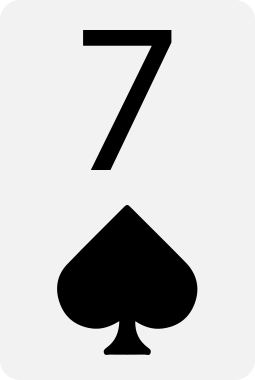
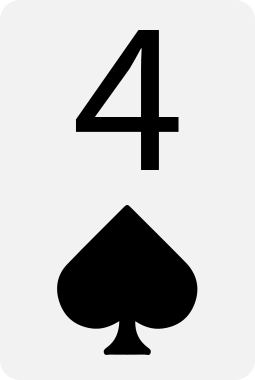
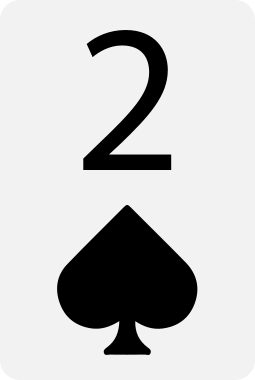
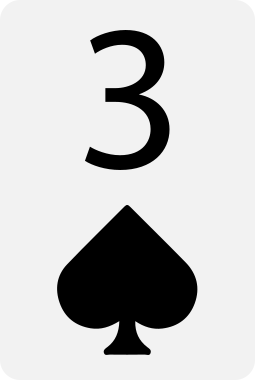
Seven-Four Suited is a classic low suited one-gapper – the kind of hand that experienced players occasionally include in a wide opening range from late position, but which most players should treat with significant caution. It has genuine drawing potential in both the straight and flush departments, and the suits give it a layer of deception that the offsuit version completely lacks. But make no mistake: this is a weak hand that wins through board interaction and position, not through raw card strength.
The seven and four are low enough that they rarely make top pair with any confidence, and the one-card gap between them limits straight combinations compared to a true suited connector like 76s or 54s. What 74s does have is a combination of two distinct draw types that occasionally overlap into powerful straight flush possibilities, and the ability to make hands that opponents simply do not see coming.
What These Odds Show for 74s
The draw odds reflect what you would expect from a low suited one-gapper. On the flop, 52.39% of runouts leave you with nothing but a high card – slightly better than many offsuit hands of higher rank because the flush draw occasionally lands, but still a majority of flops where you have not connected.
The pair equity by the river sits at 42.06%, which is on the lower end for any starting hand, largely because a seven or four pairing on most boards means you are unlikely to have top pair. Two pair arrives at 22.02% by the river and three of a kind at 4.32%, both consistent with other hands of comparable rank.
The straight odds are notable. A straight lands 0.64% of the time on the flop, 2.47% by the turn, and 5.71% by the river. That 5.71% figure mirrors Q9o almost exactly, which is striking given the difference in card rank. The reason is connectivity: 74s can complete straights through the three-four-five-six-seven and four-five-six-seven-eight and five-six-seven-eight-nine ranges, giving it multiple configurations to work with despite the one-card gap.
The flush odds are where 74s earns its suited tag. A flush arrives 0.83% of the time on the flop, growing to 2.90% by the turn and 6.47% by the river. Combined with the straight equity, this gives 74s two meaningful draw categories that frequently intersect – boards that give you both a flush draw and a straight draw simultaneously are among the most profitable spots in poker, and 74s reaches them more often than its modest rank implies.
The straight flush odds, while small at 0.11% by the river, are meaningfully higher than for most non-connector hands. This reflects the hand’s genuine dual-draw capability.
The overcard table is where reality sets in sharply. An overcard to the seven appears on the flop an extraordinary 92.14% of the time. By the turn that rises to 96.82%, and by the river it reaches 98.76%. In practical terms, this means that almost every single time you play 74s to the river, the board will contain cards higher than your seven. Top pair is almost never available to this hand. Your seven and four will regularly be the two lowest cards involved in the pot, which means 74s essentially cannot win at showdown without having made a meaningful hand – a pair is often not enough.
Hand Strength Summary
- Hand type: Low suited one-gapper
- Relative strength: Bottom third of all starting hands by raw equity
- Potential: Flush draws, straight draws, occasional straight flush; strong disguise value
- Main vulnerability: Almost never top pair; relies entirely on completing a draw or making two pair or better to win at showdown
74s is a hand that wins big when it connects and loses small when it does not. Keeping to that discipline – not committing chips without a genuine draw or made hand – is the entire key to playing it correctly.
How Seven-Four Suited Wins
74s wins almost exclusively through strong hand completion rather than showdown value with one pair:
- Completing a flush, often against opponents who cannot fold top pair or an overpair
- Making a straight through the multiple board configurations that connect with this hand
- Flopping two pair using both hole cards on a low board, extracting value from opponents holding overpairs or top pair
- Making a set with either card and getting action from players who have not read the board correctly
- Taking down pots through preflop aggression in late position, where it functions as a steal hand
- Occasionally completing a straight flush, which is one of the most profitable outcomes in all of poker due to the difficulty opponents have putting you on the hand
The disguise value of 74s is genuine. A player who raises from the button with what appears to be a premium hand and then flops a flush or straight on a low board will regularly extract maximum value from opponents who cannot conceive of that holding.
Main Weaknesses
74s has several fundamental weaknesses that make it unplayable in most positions:
- Overcards appear on the board almost universally, meaning top pair is essentially off the table as a winning outcome
- Even when you pair the seven or four, you are almost always making bottom or middle pair on a board that has connected better with opponents holding higher cards
- The one-card gap reduces straight combinations compared to 76s or 54s, the hands on either side that are more naturally suited connector territory
- Flush completions with a seven-high flush are vulnerable to being beaten by higher flushes when another player is suited in the same suit
- In raised pots out of position, the hand has almost no playability
Best and Worst Flop Textures
Strong flops
- Two cards of your suit, giving you a flush draw with implied odds to continue
- Low boards that pair both hole cards (e.g. 7♦ 4♠ 2♣), creating two pair that opponents with overpairs will not be able to fold
- Boards of five, six, eight or three, five, six creating open-ended straight draws
- Boards that give you both a flush draw and a straight draw simultaneously – these are the premium flops for 74s and justify continued aggression
Dangerous flops
- Any high card board where you have no pair and no draw – which is the majority of all flops
- Boards in a different suit where you pick up no flush equity
- Boards where you pair one card but have no additional equity and face aggression
The critical decision point with 74s is flop assessment. If the flop has not given you a flush draw, a straight draw, two pair, or a set, the hand is close to worthless and should be abandoned without significant resistance.
How It Plays by Position
- Early position: Never. The hand cannot withstand the post-flop pressure of playing out of position against multiple opponents with superior high-card strength.
- Middle position: Still not recommended in standard games. The overcard exposure is too severe to justify.
- Late position (cutoff/button): The primary and essentially only position from which 74s can be played profitably. Fold equity, position through the streets, and the ability to control pot size make it viable here in the right game conditions.
- Blinds: Completing from the small blind in an unraised pot is occasionally justifiable given the draw potential and the price. Defending against a raise from either blind is generally unprofitable.
74s is one of the purest examples of a positional hand in poker. It is not an exaggeration to say that position is not just helpful – it is a prerequisite for the hand having any positive expected value at all.
Common Mistakes with Seven-Four Suited
- Playing it from early or middle position and facing inevitable overcard pressure with no draw
- Continuing past the flop without a flush draw, straight draw, or better
- Over-estimating the value of a single pair – a pair of sevens or fours is almost always a losing hand at showdown with this holding
- Chasing flush draws without pot odds, particularly when a seven-high flush may itself lose to a higher flush
- Calling three-bets out of position with a hand that requires both position and a favourable flop to function
Comparison to Similar Hands
- Stronger than: 73s, 72s, 74o, and most lower suited one-gappers
- Weaker than: 76s, 75s, 65s, 54s, and any suited hand with a higher top card or tighter gap
- Broadly similar to: 85s, 63s – other low suited one-gappers with comparable draw profiles
The closest natural comparison is 76s and 75s. Both are suited connectors or near-connectors with similar flush potential, but both have slightly better straight connectivity. The step down from 75s to 74s costs one meaningful straight combination, and the step from 76s to 74s costs two. These are not trivial differences in a hand whose entire value proposition rests on drawing potential.
How Seven-Four Suited Performs in Multiway Pots
74s has an unusual multiway profile. On one hand, multiway pots offer better implied odds when you complete a flush or straight – more players means bigger pots and opponents who are less likely to fold strong one-pair hands. On the other hand:
- The near-universal overcard rate means you are rarely competitive without completing a draw
- Seven-high flushes become increasingly dangerous in multiway pots where another player may hold a higher flush draw in the same suit
- Straight completions are more valuable when multiple opponents can pay you off, but the draw frequency is not high enough to justify loose calls
- Two pair hands, while well disguised, can be beaten by sets or better in multi-player pots
The ideal multiway spot for 74s is a limped or small-raise pot where you can see a flop cheaply in position, assess the draw landscape, and either continue with a strong draw or abandon the hand without significant cost.
FAQ: Seven-Four Suited
Is 74s a playable hand?
In late position in the right game, yes. It has genuine drawing potential that justifies seeing flops cheaply. In any other position, it is generally a fold.
Why does the overcard rate matter so much for this hand?
Because 74s almost never makes top pair. With overcards appearing 98.76% of the time by the river, you are almost always working with bottom or middle pair at best if you do not complete a draw. This means the hand’s value is almost entirely draw-dependent.
Is a seven-high flush a strong hand?
It is a made hand, but it is vulnerable. In multiway pots or against opponents who are also drawing to a flush, a seven-high flush can lose to a higher flush. This is worth bearing in mind when deciding how much to invest in completing the draw.
How does 74s compare to 76s?
76s is a meaningfully stronger hand. The tighter gap gives it more straight combinations, and the slightly higher card rank means top pair is occasionally relevant. 74s concedes both of those advantages and should be treated as the weaker speculative hand it is.
Related Hands