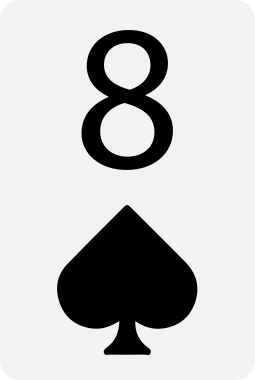
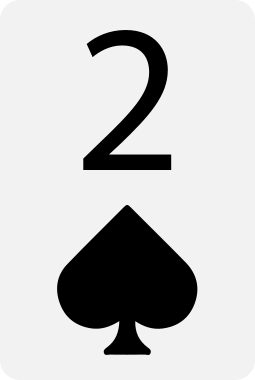
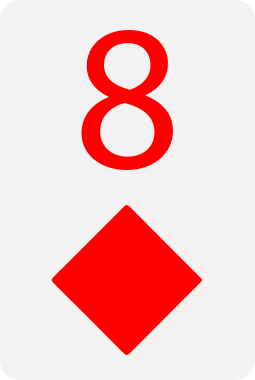
Eight Two Suited is one of the weakest starting hands in Texas Hold’em. It shares its draw odds with 83s and 92s almost exactly, placing it firmly in the category of weak suited hands where the flush draw is the only meaningful post-flop weapon. The two as the secondary card provides even less straight connectivity than the three in 83s, while the eight as the high card leaves the hand exposed to overcards on the vast majority of boards. There is very little to recommend 82s in most situations, and understanding why it belongs in the fold is more useful than searching for reasons to play it.
What These Odds Show for 82s
The draw odds for 82s are identical to 83s and 92s across every category. The 53.04% miss rate on the flop, 43.54% pair rate by the river, 22.26% two pair rate, and 6.57% flush completion rate are all consistent numbers for the weak suited two-gap and wider hand family. This mechanical similarity reinforces that the suit is the dominant factor separating these hands from their offsuit counterparts, and that the specific low ranks within the group make very little difference to the aggregate draw probabilities.
The straight column makes the two’s weakness clear. A 0.00% straight rate on the flop rising to only 2.84% by the river is among the lowest of any suited hand. The two has the narrowest straight connectivity of any card in the deck. It can only connect upward, requiring a three, four, five, and six or an ace, three, four, and five to form a straight. The eight adds mid-range straight possibilities through four-through-eight and six-through-ten combinations, but the gap between eight and two is six ranks – the widest possible gap outside of hands involving the ace – and no combination of three community cards can bridge it. The 0.00% flop straight rate reflects this directly.
The overcard table shows 86.73% on the flop and 96.90% by the river, identical to 83s. Eight ranks sit above the eight and with five community cards across the board, an overcard appears in essentially every hand. This means top pair is rarely available, and when the eight does pair it is almost always against a board containing higher cards.
The flush rate of 6.57% by the river is the hand’s one consistent equity source, and the 0.84% flop completion rate confirms that immediate flop flushes occur at a real if small frequency. The flush draw on a two-card suited flop gives the hand approximately 35% equity with two cards to come, which is a meaningful number that justifies continued investment under the right pot odds conditions.
Hand Strength Summary
- Hand type: Weak suited hand with maximum gap and low ranks
- Relative strength: Among the weakest ten percent of all starting hands
- Dominates: Almost nothing preflop
- Main vulnerability: Near-total overcard exposure, no flop straight draw, very low flush ceiling
82s is the weakest eight-high suited hand in the deck. The two provides the minimum possible secondary card value, and the flush draw is the single factor preventing this from being an unambiguous fold in every situation.
How 82s Wins
The flush is the primary and most realistic winning path. Completing a flush from 82s is a well-disguised outcome that opponents almost never anticipate, and in pots where opponents have committed chips on the strength of pairs, two pairs, or straight draws, an eight-high flush can extract significant unexpected value. The caveat is that an eight-high flush is among the weakest possible flushes, and any opponent holding a nine or higher in the same suit beats it outright.
Two pair on eight-two boards is the secondary outcome. On the rare occasions where both the eight and the two appear on the board and pair, the hand makes a disguised two pair that can extract value from opponents holding top pair who do not account for the two’s relevance. The odds of this specific board texture are low, but the implied odds when it does occur are strong.
The wheel straight is the most distinctive weapon the two provides, even in this limited context. On a board of three, four, five, 82s can make a straight using the two as a connector alongside the ace, three, four, and five. This is an infrequent outcome but genuinely surprising when it arrives.
Preflop steal equity and post-flop bluffing round out the winning scenarios. With a suited hand and an eight that can credibly pair on certain boards, the hand can take advantage of passive opponents without needing to show down.
Main Weaknesses
The two is the weakest secondary card in the deck for straight-building purposes, and paired with an eight rather than a higher card, it creates a hand with the narrowest possible straight equity of any suited combination outside of specific ace-low holdings. The 0.00% flop straight rate is the clearest expression of this. On every single flop, 82s must rely on flush draws or pair outcomes to have any continuing equity.
The flush ceiling compounds the structural weakness. An eight-high flush is beaten by opponents holding any card from nine through ace in the same suit. That is six ranks in every suit, meaning the majority of broadway cards and all face cards above the eight dominate the flush. In any pot with significant pre-flop or flop action, the probability that an opponent has a higher flush card in the relevant suit is meaningful enough to warrant serious caution before committing heavily to a made eight-high flush.
The overcard exposure at 96.90% by the river is effectively equivalent to 100% in practical terms. The hand will almost never see a board where the eight is the highest card, and top pair eight is a marginal holding even on the rare boards where it does apply.
Best and Worst Flop Textures
Strong flops
- Two cards of your suit on a low or mid-range board where opponents are less likely to hold dominating flush cards
- Eight-two-x boards where the hand makes immediate two pair with full disguise
- Boards containing three, four, and five that open a wheel draw or complete it outright
Dangerous flops
- High boards with no flush draw, which represents the large majority of all possible flops
- Single-suited boards that invite continued investment in a draw that completes roughly 20% of the time from the turn
- Boards where the hand has paired the two against any meaningful aggression, as bottom pair with no backup is almost always losing
How It Plays by Position
- Late position: The only context where the hand can be played with reasonable expectation of profitability. The flush potential gives the hand enough post-flop equity on the right board to justify a cheap flop, and the combination of pair and flush draw outcomes provides sufficient equity to continue in the right circumstances.
- Early and middle position: An unconditional fold. The hand has no resilience out of position, no straight draw on the flop, a low flush ceiling, and severe overcard exposure. None of these problems are solved by entering a pot from a disadvantaged position.
- Big blind: Completing against a very small raise is defensible only with deep stacks that justify the implied odds on a flush. Against any meaningful raise or multiple opponents showing aggression, the hand should be released without investment.
Common Mistakes with 82s
- Playing the hand because it is suited – the suit adds genuine equity, but it does not transform a fundamentally weak holding into a broadly playable one, and the discipline to fold from early and middle position is a straightforward and consistent edge
- Ignoring the flush ceiling when a flush completes – an eight-high flush against an opponent who has shown continued interest across multiple streets should prompt careful consideration, as the range of hands calling or raising frequently includes higher flush combinations
- Calling a pot-sized bet on the turn with only a flush draw – with one card to come, the flush draw completes approximately 20% of the time, requiring five-to-one pot odds to call profitably, and without that price the call is negative expectation regardless of implied odds
Comparison to Similar Hands
- Stronger than: 82 offsuit, 72s in straight potential, any non-suited version of itself
- Weaker than: 83s, 84s, 85s, 86s, 87s, any eight-high suited hand with a better secondary card
The comparison to 83s is the most direct. That hand adds one rank to the secondary card, opening a small number of additional straight combinations and marginally raising the floor of the kicker when pairing the low card. In practice, 82s and 83s are treated identically at most tables, but 83s is the marginally stronger hand by every measurable metric.
The comparison to 72s is the one context where 82s appears in a favourable light. Seven Two Offsuit is widely cited as the worst starting hand in poker, and 72s is not far above it in the suited category. 82s benefits from a higher rank ceiling in the eight versus seven, producing slightly lower overcard exposure at 86.73% on the flop compared to 72s, and marginally better straight connectivity through the eight’s higher position in the rank ladder. Neither difference is large, but they are real.
How 82s Performs in Multiway Pots
In multiway pots, 82s faces the compound problems of all weak suited hands at an amplified scale. The flush draw benefits from improved implied odds when more players are present, but the eight-high flush ceiling becomes an increasingly serious concern as the field widens. In a four-way pot on a three-flush board, the probability that at least one opponent holds a nine or higher in the same suit is meaningfully higher than in a heads-up pot, and committing heavily to an eight-high flush against multiple players who have shown continued interest is a vulnerable position to be in.
The wheel straight and two pair outcomes retain their disguised value in multiway pots and can extract disproportionate value when they arrive. These are the scenarios where seeing a cheap flop with 82s pays off in aggregate, even if the hand folds on the vast majority of boards.
Outside of these specific outcomes, multiway pots should prompt minimal investment and quick exits on unfavourable boards.
FAQ: Eight Two Suited
How does 82s compare to 83s?
The two hands are extremely close in strength and should be treated identically in almost all situations. 83s has marginally better straight connectivity through the three and a slightly higher low-card kicker. Neither difference is large enough to change the fundamental assessment of either hand.
Is 82s ever better than 72s?
Yes, modestly. The eight provides a slightly higher rank ceiling than the seven, producing lower overcard exposure and marginally better straight connectivity through the eight’s mid-range combinations. Both hands are extremely weak and should rarely be played outside of the most favourable positional and pricing conditions.
Why does 82s have the same draw odds as 92s and 83s?
Because the draw probability calculations are determined primarily by the gap between the two ranks, the suit, and the overall deck composition. Hands with the same structural gap and the same suit produce near-identical probabilities regardless of the specific ranks involved, as long as neither rank is at the very extreme of the deck.
What is the practical difference between 82s and 82 offsuit?
The flush draw is the entire difference. 82 offsuit has no secondary equity path whatsoever when it misses the board, while 82s has approximately 35% equity on any two-flush flop in its suit. That difference is large enough to make the suited version marginally playable in specific spots and the offsuit version an essentially unconditional fold.
Related Hands