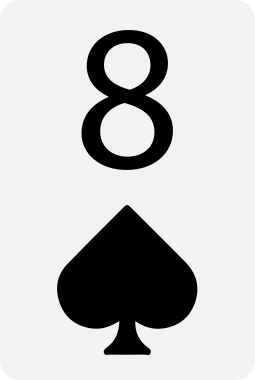
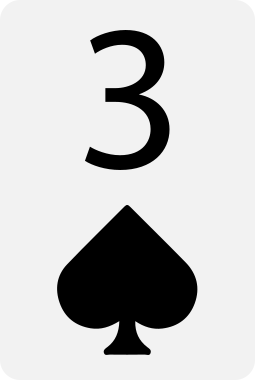
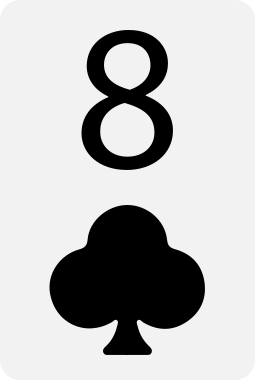
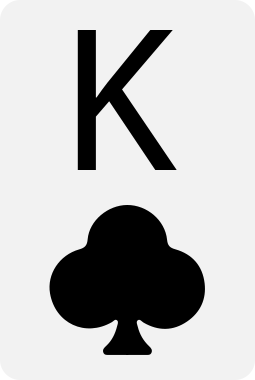
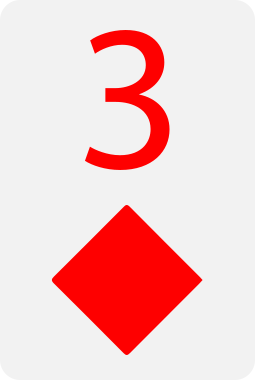
Eight Three Suited is a weak starting hand that sits near the bottom of the playable suited hand spectrum. The suit rescues it from the category of hands with essentially no post-flop equity, but the five-card gap between the eight and three creates straight draw problems that the flush potential only partially compensates for. It is a hand that belongs in the fold the vast majority of the time, with a narrow set of conditions where seeing a flop can be justified.
What These Odds Show for 83s
The draw odds for 83s will look familiar to anyone who has followed this series closely. The numbers are identical to 92s across every category, which reflects the same structural reality discussed there. Two suited hands with equivalent gaps between their ranks, equivalent rank distributions across the deck, and no pocket pair produce near-identical draw probabilities regardless of the specific ranks involved. The 53.04% miss rate on the flop, 43.54% pair rate by the river, and 22.26% two pair rate are all consistent with the weak suited hand category.
The straight column tells the story most clearly. A 0.00% straight completion rate on the flop means 83s cannot complete a straight from three community cards alone under any circumstances. The gap between eight and three is five ranks, and no combination of three cards bridges that distance into a made five-card straight. By the turn that opens to 0.74%, and by the river it reaches 2.84%, among the lowest straight rates of any suited hand. The three can contribute to ace-through-five wheel straights, while the eight can anchor mid-range straights through four-through-eight or six-through-ten configurations, but both require very specific board runouts to materialise.
The flush column is where 83s earns its modest claim to playability. A 6.57% chance of completing a flush by the river, with 0.84% arriving complete on the flop, is consistent with all other suited hands regardless of rank. The flush draw on a two-card suited flop provides roughly 35% equity with two cards to come, which is the single most meaningful piece of post-flop potential this hand possesses. It is important to note, however, that an eight-high or three-high flush is among the weakest possible flushes. Any opponent holding a higher card in the same suit beats the hand outright, and the eight does not block many of those combinations effectively.
Unlike 92s, which has an overcard table showing 93.27% river exposure, 83s has no overcard table provided. This is consistent with the page structure for lower-ranked hands where the overcard data becomes less individually meaningful, but the implication is clear. With an eight as the highest card, the overcard exposure is severe. Eight ranks sit above the eight in the deck, and on virtually every board the hand will face at least one card of higher rank.
Hand Strength Summary
- Hand type: Weak suited two-gapper with a very low secondary card
- Relative strength: Bottom tier of all starting hands, marginally above 83 offsuit
- Dominates: Almost nothing preflop
- Main vulnerability: Near-complete overcard exposure, no straight draw on the flop, weak flush ceiling
83s is a hand defined by what it cannot do. Its one genuine weapon is the flush draw, and even that produces only a low flush when it completes.
How 83s Wins
The flush is the clearest and most reliable path, as it is for all weak suited hands. Completing a flush from a holding opponents will never credit requires only that the board runs out two cards of your suit and opponents commit chips on the strength of their non-flush holdings. An eight-high flush is not a lock, but against opponents without a higher flush card it wins at showdown.
Two pair is the secondary path. On eight-three-x boards the hand makes disguised two pair immediately, and opponents holding top pair or an overpair have no particular reason to fear the three until the two pair is revealed. At 22.26% by the river, two pair is achievable but requires a board that contains both key ranks.
The wheel straight is worth noting. With a three in hand, boards containing ace, two, four, and five create a straight using the three as a connector. This is an infrequent but genuinely surprising outcome, and in the right pot it can extract significant value from opponents who did not account for a wheel possibility.
Late position steals and semi-bluffs on suited boards round out the winning scenarios. The flush draw lends post-flop credibility to continuation bets and turn barrels on two-flush boards that the offsuit version cannot replicate.
Main Weaknesses
The gap between eight and three is the structural problem that limits straight potential more severely than most suited hands. Five ranks separate the two cards, requiring a very specific set of connecting community cards to build a straight. The 0.00% flop straight rate is the clearest expression of this, and it means that on every flop, 83s must rely entirely on pair strength or flush draws to continue with any equity.
The flush ceiling is a real limitation that deserves attention. An eight-high flush loses to any opponent holding a nine, ten, jack, queen, king, or ace of the same suit. On a three-flush board, any opponent who stayed in with a single suited card higher than the eight beats the hand outright. In multiway pots on flush-completing boards, the probability that someone holds a higher flush is meaningful, and the hand can find itself in a dominated flush situation without warning.
Pair strength with 83s is minimal in most board contexts. Pairing the three is almost always bottom pair, while pairing the eight is frequently second or third pair given the severe overcard exposure. Neither outcome generates reliable showdown value.
Best and Worst Flop Textures
Strong flops
- Two cards of your suit, particularly on low or mid-range boards where opponents are less likely to hold high suited cards that dominate the flush draw
- Eight-three-x boards where the hand immediately makes two pair with strong disguise
- Boards containing an ace, two, four, or five that open wheel straight draw possibilities around the three
Dangerous flops
- High boards with no flush draw, representing the majority of all possible flops
- Boards with only one card of your suit that invite continued investment in a draw unlikely to complete
- Any board where the hand has paired the three and faces aggression, as bottom pair with no live draw is almost always behind
How It Plays by Position
- Late position: The only context where seeing a flop can be justified. The flush potential gives the hand enough post-flop equity on the right board to warrant a cheap entry, and the disguised nature of both the flush and the two pair outcomes provides genuine implied odds when they hit.
- Early and middle position: A clear fold. The combination of weak rank, no straight draw on the flop, low flush ceiling, and severe overcard exposure makes out-of-position play consistently unprofitable.
- Big blind: Completing against a very small single raise is defensible if effective stacks are deep enough to justify the implied odds on a flush. Against any meaningful raise or multiple opponents showing aggression, the hand should be folded without hesitation.
Common Mistakes with 83s
- Overcommitting to a low flush draw without accounting for the flush ceiling – unlike a hand holding king-jack suited, where a flush is nearly always the best flush on the board, 83s arrives at a flush that can be beaten by six higher ranks in the same suit
- Playing from out of position because it is suited – the suit adds equity, but it does not transform a fundamentally weak hand into one that can navigate out-of-position play profitably, and the discipline to fold from early and middle position is a straightforward edge
- Chasing a flush draw with inadequate pot odds on the turn – with one card to come, a flush draw completes roughly 20% of the time, requiring five-to-one pot odds to call profitably, and pot-sized or over-sized bets do not meet that threshold
Comparison to Similar Hands
- Stronger than: 83 offsuit, 72s, 73s, 82s in most straight-related contexts
- Weaker than: 87s, 86s, 85s, 84s, any suited hand with better connectivity
The comparison to 84s is instructive. Adding just one rank to the secondary card opens a small number of additional straight combinations and marginally raises the flush ceiling. The jump to 87s represents a much larger improvement, adding genuine straight connectivity that makes the hand playable in a far wider range of situations. Among the weak suited hands with an eight as the high card, 83s sits at the weakest end of the spectrum, eclipsed only by 82s below it.
Compared to 92s from earlier in this series, 83s has lower overcard exposure in one respect. The eight sits below the nine, which means more ranks outrank it, but the three rather than the two as the secondary card opens slightly more straight combinations, particularly around the wheel. In practical terms the two hands are extremely close in strength and should be treated identically at the table.
How 83s Performs in Multiway Pots
In multiway pots, 83s faces the same dynamic as other weak suited hands. The flush draw benefits from improved implied odds when more players are present, because a completed flush in a large pot extracts more value from opponents who have built hands on different parts of the board. However, the eight-high flush ceiling becomes a more serious concern in multiway pots, where the probability of at least one opponent holding a higher card in the same suit increases with each additional player.
The two pair outcome retains its multiway value for the same reasons discussed across this series. A disguised eight-three two pair in a contested pot can extract significant chips from opponents holding top pair who do not account for the three’s relevance on the board.
Beyond these specific scenarios, multiway pots should prompt reduced investment with 83s. The hand has too narrow a range of winning outcomes and too low a flush ceiling to justify aggressive commitment in large multiway pots.
FAQ: Eight Three Suited
How does 83s differ from 92s in practical play?
The hands are structurally very close and should be treated similarly at the table. The nine in 92s provides marginally higher rank coverage and slightly reduced overcard exposure, while the three in 83s opens a small number of additional straight combinations around the wheel. Neither difference is large enough to meaningfully change how the hands are played.
Why is the flush ceiling a concern for 83s specifically?
Because an eight-high flush is beaten by any opponent holding a nine, ten, jack, queen, king, or ace of the same suit. With six ranks above the eight in every suit, the probability of a dominating flush card being present in an opponent’s range is higher than for any suited hand with a nine or above as its top card.
Is the wheel straight draw relevant with 83s?
It exists but should not be overweighted. Boards containing an ace, two, four, and five are needed to complete it, and even when it arrives, a player holding a six in addition to wheel cards beats the hand with a higher straight. It is a genuine possibility rather than a reliable equity path.
When is 83s ever worth playing?
In late position with no prior action and favourable implied odds for a flush. Deep stacks improve the case slightly by increasing potential payoffs. In most other contexts it should be folded.
Related Hands