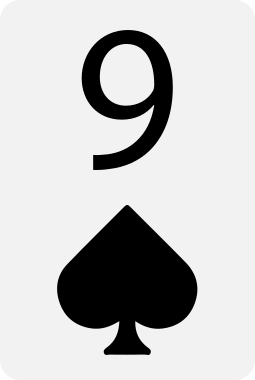
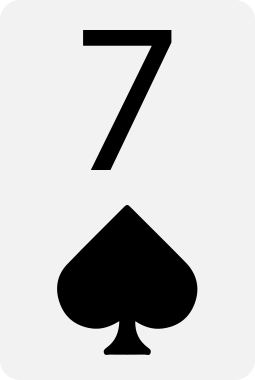
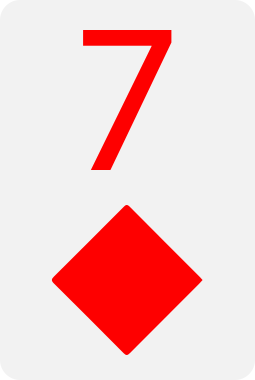
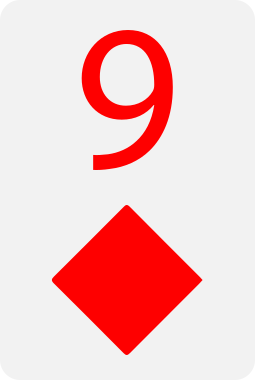
Nine Seven Offsuit is a speculative two-gap connector that sits in a similar bracket to 87o but with a slightly different set of trade-offs. The two-card gap between the nine and seven reduces straight potential compared to a connected hand like 98o or 87o, but the nine as the high card provides modestly better board coverage than lower connectors, and the hand still generates enough straight equity to be a genuine consideration in the right positional conditions. It is not a hand to play broadly, but it has more going for it than the disconnected and weak-kicker offsuit hands lower in the range.
What These Odds Show for 97o
The straight column is the defining feature of 97o and the primary reason it warrants a different discussion to the completely disconnected offsuit hands reviewed in this series. A 0.98% straight completion rate on the flop rises to 3.52% by the turn and reaches 7.75% by the river. That river figure is the headline number. At 7.75%, 97o completes a straight nearly as often as 87o at 9.08%, and considerably more often than hands like K8o, A6o, or Q8o, all of which sit below 3% by the river.
The gap between 87o and 97o in straight rate reflects the connectivity difference. 87o is a one-gap connector where the six and nine both complete open-ended draws, while 97o is a two-gap connector where the board must provide more specific cards. However, the nine and seven still share a meaningful range of straight combinations. Eight-ten boards give the hand an open-ended draw to both the six and the jack. Six-eight boards provide a similar structure. Ten-jack boards open a gutshot to the eight completing a seven-through-jack straight. These combinations are slightly less common than the one-gap equivalent but are real enough to produce a 7.75% river completion rate that substantially exceeds most non-connected hands.
The pair rate of 43.44% by the river and two pair rate of 22.40% are consistent with comparable offsuit hands. The pair strength of 97o is modest in the same way as all low-rank offsuit hands. Pairing the seven frequently produces bottom or near-bottom pair, while pairing the nine is more useful but still vulnerable on most boards given the 93.27% river overcard exposure.
The overcard table for 97o is identical to 92s, with 79.29% on the flop and 93.27% by the river. With a nine as the high card, four ranks sit above it, and the probability of at least one appearing on the board is high across all streets. Top pair nine is a fragile holding in contested pots, and the hand relies on straights and disguised two pair rather than high-card strength to generate value.
Hand Strength Summary
- Hand type: Speculative two-gap offsuit connector
- Relative strength: Below average, above average within the two-gap connector category
- Dominates: Little preflop, generates post-flop equity primarily through straight draws
- Main vulnerability: Two-gap reduces straight draw frequency, weak pair strength, no flush draw, significant overcard exposure
97o is better than it looks among the non-connected hands reviewed in this series, but it requires specific board textures and favourable conditions to realise that potential.
How 97o Wins
The straight is the primary mechanism, as it is for all speculative connectors. At 7.75% by the river, 97o completes a straight in a meaningful proportion of hands, and the combination of nine and seven covers a range of board textures that create draw equity across multiple streets. On eight-ten boards the hand has an open-ended draw with eight outs. On six-eight boards a similar structure exists. Even gutshot draws, which provide four outs at roughly 9% per card, occur on several board types and provide enough equity to justify continued investment at the right price.
The disguised nature of 97o straights is a genuine asset. A player holding nine-seven in a pot that developed around an opponent’s top pair or overpair is not a holding anyone is accounting for when the eight and ten land on the board. The implied odds from opponents who cannot fold a strong one-pair hand against a completed straight are often the largest single source of value this hand generates.
Two pair is the secondary winning path at 22.40% by the river. Nine-seven-x boards produce immediate two pair with complete disguise, and boards where both cards pair across multiple streets create well-hidden holdings that can extract value from opponents building on different parts of the board.
In late position, 97o can also generate value through steal raises and semi-bluffs on connected boards. An eight-ten flop gives the hand genuine draw equity that supports continued aggression regardless of whether a pair has been made.
Main Weaknesses
The two-gap structure is the fundamental constraint on 97o’s straight potential. Unlike 98o or 87o, where both cards participate in adjacent straight combinations simultaneously on many boards, 97o requires the board to provide a specific bridging card before either of its two natural straight paths becomes complete. An open-ended draw with 97o typically requires an eight on the board already, followed by a six or ten to complete, whereas 98o can make a straight through six-seven-ten or five-six-seven-eight configurations on a broader set of boards.
This distinction is visible in the numbers. 87o reaches 9.08% straight completion by the river while 97o reaches 7.75%, a difference of roughly one and a third percentage points. In isolation that seems small, but it reflects a meaningful structural difference in how often the hand participates in draw situations versus how often it must play purely for pair value or fold.
The absence of a flush draw is the same limitation that applies to all offsuit hands in this series. A two-gap suited connector like 97s adds flush equity that creates combined drawing hands on two-tone boards, semi-bluff credibility, and multiway pot value. 97o has none of those additional equity paths when pair and straight draws are unavailable.
Best and Worst Flop Textures
Strong flops
- Eight-ten-x boards where the hand has an open-ended straight draw to the six and jack
- Six-eight-x boards producing a similar structure in the opposite direction
- Nine-seven-x boards where the hand makes immediate two pair
- Ten-jack-x boards where a gutshot to the eight is live and implied odds are strong against opponents building on high pairs
Dangerous flops
- High unconnected boards containing aces, kings, and queens where neither card pairs and no draw exists
- Boards with a single mid-range card but two disconnected high cards that offer no straight path and no reliable pair
- Any board where the hand faces aggression without a live draw or a strong made hand to justify continuing
How It Plays by Position
- Late position: Where 97o is at its most viable. In an unopened pot from the cutoff or button, the hand can be raised or completed with a reasonable expectation of seeing a useful flop at a manageable price. When the board connects with a draw, position allows the hand to be played aggressively. When it misses, a quick fold on the flop loses the minimum.
- Early and middle position: A fold in most structured games. The hand requires specific board textures to be profitable and needs position to navigate post-flop efficiently. Out of position, facing a bet on a missed board, the hand has nothing, and drawing to a straight from out of position with a two-gap hand often involves calling bets without the implied odds to justify it.
- Big blind: Can complete against a single small raise and benefit from seeing a cheap flop. The fit-or-fold approach on the flop is appropriate – on connected boards with draw equity continuing is reasonable, but on disconnected misses releasing without further investment is the correct response.
Common Mistakes with 97o
- Overestimating draw equity without accounting for the two-gap structure – on many boards 97o has only a gutshot draw with four outs rather than the open-ended eight-out draw of a fully connected hand, and four outs with one card to come changes the pot odds calculation significantly
- Calling multiple streets without the correct price – the straight potential makes 97o feel like a drawing hand worth chasing, but without the correct pot odds at each decision point, chasing a gutshot across the turn and river is a consistent money-loser
- Playing from out of position on connected boards without a live draw – the nine and seven look connective, but when the specific straight combinations are not actually live, the hand has only modest pair equity to fall back on
Comparison to Similar Hands
- Stronger than: 96o, 95o, 86o, 85o, 75o, other two-gap and wider offsuit hands with lower ranks
- Weaker than: 97s, 98o, 87o, 76o, any suited connector or one-gap hand in a similar rank range
The comparison to 87o is the most instructive. That hand’s one-gap structure produces a 9.08% straight rate versus 97o’s 7.75%, and on many flops 87o has an open-ended draw while 97o has only a gutshot. Over many hands this difference is meaningful, and 87o should be considered the stronger speculative hand despite the nine’s higher rank giving 97o marginally lower overcard exposure on the broader board.
The comparison to 97s highlights the value of the suit. The suited version adds flush draw equity that creates combined drawing situations on two-tone boards and enables semi-bluff aggression in spots where 97o has limited options. Among the two-gap offsuit connectors, 97o is one of the stronger options due to its rank position, but it sits clearly below its suited counterpart.
How 97o Performs in Multiway Pots
In multiway pots, 97o’s straight potential is at its most valuable and its pair strength is at its least reliable, consistent with all speculative connectors. Completing a straight in a large multiway pot against opponents who have invested on the strength of pairs or better hands is the highest-value scenario the hand can generate, and the disguised nature of nine-seven in a raised pot amplifies those implied odds.
The risk in multiway pots is investing across multiple streets on a draw that does not complete. With a two-gap hand, flops that appear connected can produce gutshot rather than open-ended draws, and the difference between four outs and eight outs is significant when deciding whether pot odds justify a call against multiple opponents.
As with 87o, the discipline to see cheap flops in multiway situations, continue only with genuine draw equity, and fold quickly when the board does not connect is the key to realising the hand’s multiway potential without losing value through speculative overcalling.
FAQ: Nine Seven Offsuit
How does the two-gap structure affect 97o compared to 87o?
The primary effect is on how often the hand has an open-ended draw versus a gutshot draw on the flop. 87o participates in more open-ended draw configurations because the six and nine are both natural neighbours. 97o requires an eight on the board before either the six or ten can complete an open-ended structure, which produces fewer open-ended draw flops and more gutshot situations. This is reflected in the 9.08% versus 7.75% river straight completion difference.
Is 97o playable in most games?
In late position with no prior action, yes. In most other contexts it requires specific conditions – particularly cheap entry and connected board textures – to be profitable.
What is the best flop for 97o?
An eight-ten board gives the hand an open-ended draw to both the six and the jack with eight outs and two cards to come, representing approximately 32% equity. This is the flop texture that most closely replicates the experience of playing a connected hand and is where 97o is at its strongest.
How does 97o compare to 97 suited?
97s is a meaningfully stronger hand. The flush draw adds secondary equity that creates combined drawing situations on two-tone boards, enables semi-bluffs, and generates multiway value that 97o cannot replicate.
Related Hands