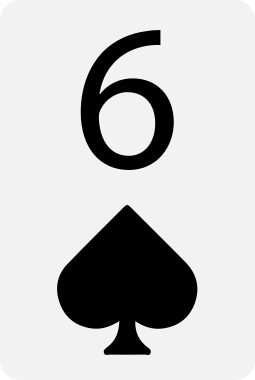
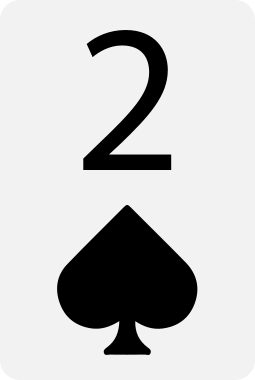
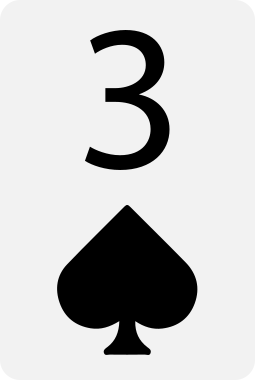
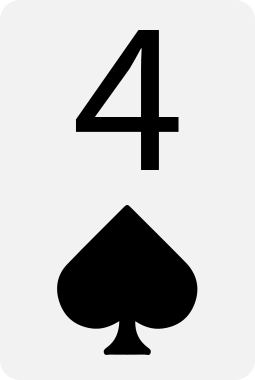
Ace-Six Suited is a speculative hand with genuine upside. The ace gives it strong top-pair potential and kicker advantage, while the suited nature opens the door to nut flush draws – one of the most valuable draws in Texas Hold’em.
Before the flop, A6s is not a premium hand, but it is far from a throwaway. It plays well in position, benefits significantly from its flush potential, and can disguise its strength well in the right spots.
What These Odds Show for A6s
Starting with a high card frequency of 53.04% on the flop, A6s is a hand that often misses entirely – a reminder that speculative hands require patience and position to realise their value. That figure drops to 18.27% by the river, meaning over four in five runouts will produce at least a pair.
The pair odds peak at 47.07% on the turn, and many of those will be a pair of aces – a strong made hand, though one that must be played carefully given the weak kicker. By the river, two pair arrives 22.26% of the time as the hand develops further.
The flush equity is where A6s earns its suited premium. There is a 6.57% chance of making a flush by the river, and crucially, when it gets there it will almost always be the nut flush. That makes the hand considerably more valuable than its raw pair odds suggest, as nut flushes are rarely outdrawn and frequently win large pots.
Hand Strength Summary
- Hand type: Suited ace, speculative
- Relative strength: Upper-middle tier starting hand
- Dominates: Weaker aces (A2–A5), most low pairs
- Main vulnerability: Dominated by stronger aces (AK, AQ, AJ, AT)
A6s derives most of its value from the nut flush draw and top-pair potential, rather than raw pair strength.
How Ace-Six Suited Wins
- Hitting top pair with a strong kicker and outrunning weaker aces
- Completing the nut flush and winning at showdown
- Making two pair or trips on coordinated boards
- Representing a wide range of strong hands due to the ace blocker
The ace blocker is an underrated asset – holding an ace reduces the chance opponents hold AA or strong ace-x hands, which has meaningful implications in bluffing and semi-bluffing spots.
Main Weaknesses
- The six is a weak kicker – pairing it produces a vulnerable second pair
- Dominated by any ace with a better kicker (A7 through AK)
- Misses the flop entirely more than half the time (53.04%)
- Flush draws only complete 6.57% of the time by the river – they require patience and correct pot odds to chase
Playing A6s out of position amplifies all of these weaknesses. The hand performs at its best when the player controls the action rather than reacting to it.
Best and Worst Flop Textures
Strong flops
- Ace-high boards with two cards of the same suit (top pair plus nut flush draw)
- Three suited cards of the matching suit (completed nut flush)
- Low boards with a flush draw (disguised draw with little reverse implied odds risk)
Dangerous flops
- Ace-high boards with no flush draw (top pair with weak kicker, vulnerable to dominated ace)
- Paired boards (reduced flush draw value, difficult to assess hand strength)
- High-card dry boards with no suits (no draw equity, weak showdown value)
The best scenario is flopping an ace with a flush draw to the same suit – combining immediate made hand strength with powerful drawing equity.
How It Plays by Position
- Early position: Generally a fold or cautious open in full-ring games; more viable in short-handed play
- Middle position: A reasonable open, but proceed with caution facing 3-bets
- Late position (button/cutoff): A strong open – position maximises the hand’s post-flop potential
- Blinds: Playable as a defend against steals, but be wary of kicker problems out of position
Position dramatically affects how well A6s realises its equity. In late position, the hand becomes considerably stronger than its raw numbers imply.
Common Mistakes with Ace-Six Suited
- Overvaluing top pair with a weak kicker and committing too many chips
- Chasing flush draws without the correct pot odds
- Playing the hand out of position in multi-way pots where it loses much of its edge
- Failing to use the ace blocker as a bluffing asset on appropriate board runouts
The most common error is treating A6s like a strong ace. Top pair of aces is a good hand, but with a six kicker it is frequently behind and must be played with appropriate caution.
Comparison to Similar Hands
- Stronger than: A6o, A5s (marginally – no wheel potential, offset by better kicker), most off-suit connectors
- Comparable to: A7s, A5s
- Weaker than: AKs, AQs, AJs
Worth noting: A5s has a slight strategic edge in some formations due to the wheel straight possibility (A-2-3-4-5), which A6s cannot make. However, A6s holds a stronger kicker when simply pairing the six.
How Ace-Six Suited Performs in Multiway Pots
A6s loses equity in multiway pots for several reasons:
- Top pair with a six kicker becomes increasingly dangerous as more opponents see the flop
- Flush draws, while powerful heads-up, carry reverse implied odds risk when another player could hold a higher flush
- More opponents increases the chance that someone holds a better ace
In multiway pots, A6s plays best as a drawing hand hoping to flop a flush draw, and should be cautious about continuing without significant equity.
FAQ: Ace-Six Suited
Is Ace-Six Suited a good starting hand?
It is a playable hand, particularly in position or when the pot is unraised. Its value comes from the nut flush potential and ace strength rather than the kicker.
Should you call a 3-bet with A6s?
Generally no, unless the pot odds are favourable and you are in position. Against tight 3-betting ranges, A6s is often dominated.
How often does A6s make a flush?
By the river, A6s completes a flush 6.57% of the time. When it does, it will almost always be the nut flush.
What makes A6s better than A6 offsuit?
The flush draw adds meaningful equity on suited flops and significantly increases the hand’s ability to continue profitably after missing top pair on the flop.
Related Hands