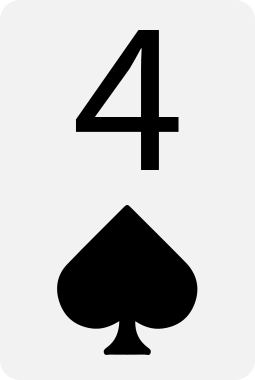
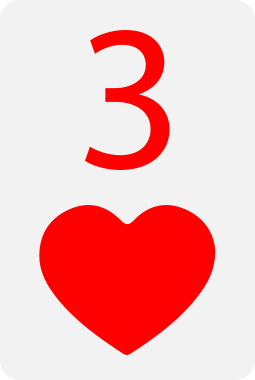
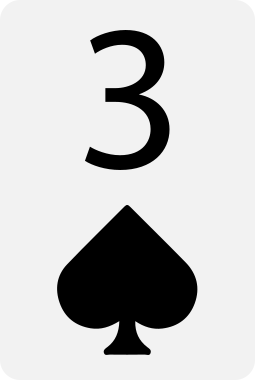
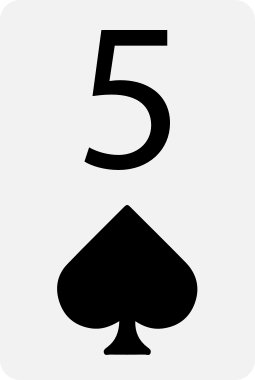
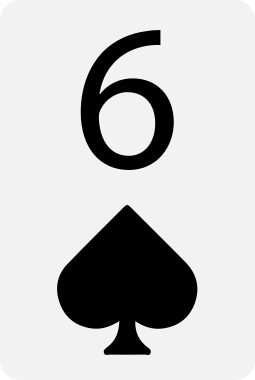
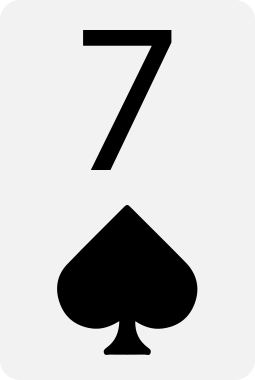
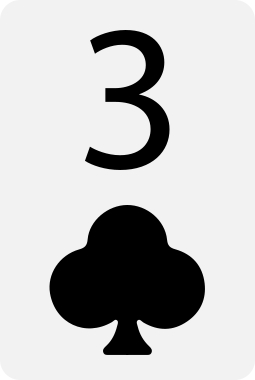
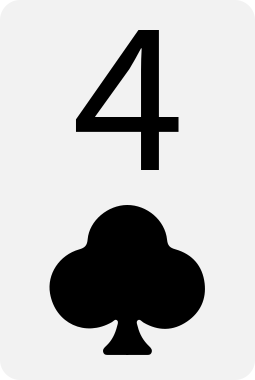
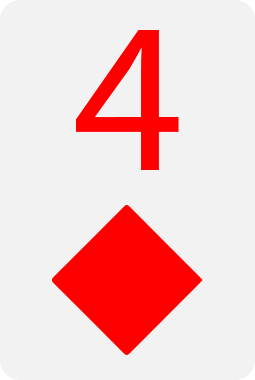
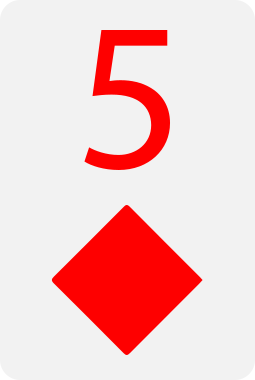
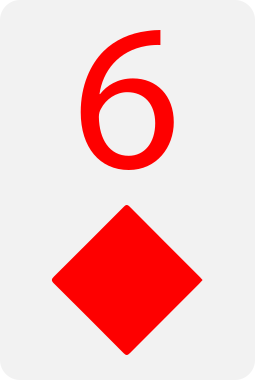
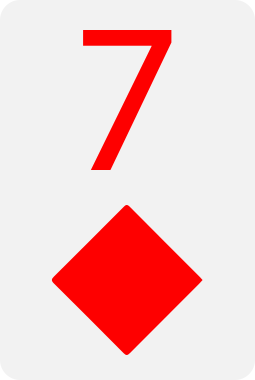
Four–Three offsuit is the lowest two–card combination in Texas Hold’em that retains any genuine straight potential, and it arrives at the end of the low connector sequence with a draw odds table that reflects its position precisely. The hand shares structural DNA with 54o and 53o — a true connector or near–connector at the bottom of the rank ladder — but the four as the top card produces the most severe overcard exposure of any hand covered in this series. The overcard table for 43o does not just approach certainty. By the river, it reaches 99.99%. The hand will see at least one overcard on the board in effectively every single hand it ever plays.
What These Odds Show for 43o
The draw odds table for 43o follows the low connector pattern in most categories. High card on the flop at 52.90% — consistent with 64o, 75o, and 86o. Pair by the river at 43.73%, two pair at 22.40%, three of a kind at 4.37% — all in line with the one–gap and true connector hands at this rank level.
The straight rate is 0.98% on the flop, 3.30% by the turn, and 7.09% by the river. That 7.09% is lower than 54o’s 9.18%, lower than 53o’s 7.47%, and lower than 64o’s 7.42%. The decline reflects 43o’s position at the very bottom of the rank ladder — as the top card drops from five to four, the number of available straight combinations shrinks. 43o can form straights running ace–to–five, two–to–six, three–to–seven, and four–to–eight — four combinations, but two of those four require board cards at the extreme low end of the deck, which appear less frequently than the mid–range boards that serve the higher connectors. The wheel draw is once again available, and once again carries the same limited implied value discussed with 54o and 53o.
The overcard table is the defining feature of the hand and the starkest number on this page. At 99.39% on the flop, 99.91% by the turn, and 99.99% by the river, 43o operates in overcard territory with a completeness that no other hand in this series approaches. The four as a top card is outranked by every other rank in the deck except the three, two, and ace–low scenarios — and even accounting for the ace’s dual role, the practical result is that a board without at least one overcard to the four is a statistical near–impossibility across any meaningful sample. The 0.01% of river runouts without an overcard is not a board texture to plan around. It is an anomaly.
Hand Strength Summary
- Hand type: Low offsuit true connector — the lowest with four–combination straight potential
- Relative strength: Among the weakest starting hands in Texas Hold’em
- Best case: Open–ended straight draw on a very low board, in position, deep stacks, passive opponents
- Main vulnerability: Certain overcard domination on virtually every board, no flush equity, pair value non–existent in contested situations, reduced straight rate compared to 54o
43o has one path to winning a meaningful pot — the straight — and that path is narrower than for any of the low connectors above it in this series. Everything else the hand produces is irrelevant in any contested situation.
How Four–Three Offsuit Wins
43o wins through an even narrower set of routes than 54o or 53o:
- Completing an open–ended straight draw, ideally on a low board where the specific combination is unexpected — a five–to–eight or six–to–seven board texture that produces the draw cleanly
- Making two pair specifically on a four–three board — requiring both hole cards to connect simultaneously on an already rare board texture
- Stealing uncontested pots preflop from late position, though the four carries less high–card credibility than a five or six in that context
- Semi–bluffing an open–ended straight draw from position with eight outs when the draw arrives
A pair of fours or threes in any contested pot is not a realistic winner. The 99.99% overcard rate by the river is not a figure that admits of exceptions at the table.
Main Weaknesses
43o’s weaknesses are the low connector problems at their absolute extreme:
- The 99.39% overcard rate on the flop is the highest of any hand covered in this series — even 54o, which shares a four–card difference in top card rank, sits at 98.14%. The four as a top card means that fives, sixes, sevens, eights, nines, tens, jacks, queens, kings, and aces all constitute overcards, and collectively those ten ranks cover virtually every possible board combination
- A pair of fours is the second–lowest possible pair, beaten by everything above it
- A pair of threes is the lowest possible pair, beaten by everything
- The straight rate of 7.09% is the lowest of the one–gap and true connectors in this range, reflecting the four’s position at the bottom of the mid–card straight–forming window
- No flush equity whatsoever
- The wheel draw, as with 54o and 53o, produces the lowest possible straight — vulnerable to any higher straight on the same board and carrying reduced implied value against aware opponents on low boards
- The two–to–six and three–to–seven combinations require very specific low board textures that are uncommon and often shared with opponents holding similar low–range holdings
Best and Worst Flop Textures
Strong Flops
- 2–5 or 5–6 boards giving an open–ended straight draw — the primary and essentially only objective
- A–2 boards creating a wheel draw, though the implied value of the wheel is the most limited of any straight combination at this level
- 4–3–x boards for immediate two pair on a completely dry, disconnected texture with no draws for opponents
- Low boards where a semi–bluff with an open–ended draw can take the pot before showdown
Dangerous Flops
- Every other flop — a 99.39% overcard rate on the flop is as close to a universal statement as statistics allow. Planning around low boards with 43o is the rare exception, not a viable default approach
- Boards with partial connections that produce only a gutshot rather than an open–ended draw
- Any multiway pot on any board texture whatsoever
- Boards where opponents holding higher connectors or low suited cards share the straight outs or have better draws
How It Plays by Position
- Early position: Never, without exception. 43o from early position is among the clearest folds in Texas Hold’em.
- Middle position: A fold at any table format. There is no standard middle–position argument for 43o.
- Late position: The hand’s only defensible context, and the weakest late–position case of any hand in the low connector family. From the button or cutoff in an unopened pot against passive opponents, a steal raise uses fold equity rather than hand strength. The four provides less high–card credibility than any of the higher connectors, making the steal marginally less effective against observant opponents. A limp to see a cheap flop is the more common approach in this specific spot.
- Blinds: In the big blind with maximum pot odds against a single steal raise, 43o is defensible on connectivity grounds alone — the true connector structure means a straight draw or two pair will arrive on a subset of flops. One street of investment, entirely draw–dependent postflop. From the small blind, folding is correct against any opponent with a reasonable range.
Common Mistakes with Four–Three Offsuit
The errors with 43o concentrate all the low connector mistakes into their most extreme form:
- Treating the hand as equivalent to 54o because both are true connectors at the bottom of the range — 54o has five straight combinations and a 9.18% completion rate versus 43o’s four combinations and 7.09%, a meaningful difference of more than two percentage points
- Continuing past the flop with a pair of fours or threes under any contested circumstances, where the 99.39% overcard rate means the hand is behind virtually every opponent who has connected
- Overvaluing the wheel draw — A–2–3–4–5 is a made straight but the lowest possible one, and on the low boards that produce it, experienced opponents will often proceed with caution
- Chasing gutshot draws rather than recognising the specific board textures that produce open–ended draws for this hand
- Playing the hand in multiway pots for more than a single minimum investment, where the overcard exposure and shared outs reduce the equity to near–zero
Comparison to Similar Hands
- Stronger than: 4–2o and 3–2o, where one of the two cards falls below the range where any meaningful straight combination exists beyond the wheel; 32o has only the wheel available as a completed straight and sits at the absolute floor of draw potential
- Weaker than: 43 suited, which adds flush equity that doubles the hand’s path to a strong made hand and transforms its multiway value entirely; 53o, where the five as the top card reduces overcard exposure from 99.39% to 98.14% and the specific straight combinations overlap in a more favourable range of board textures; 54o, which is a true connector with five combinations and a 9.18% completion rate
- Similar to: 53o — the closest structural comparison, one step up in rank with the same one–gap structure and nearly identical straight rates, differentiated primarily by the overcard table
The comparison between 43o and 54o is the most instructive for this hand. 54o is a true connector with five straight combinations — ace–to–five, two–to–six, three–to–seven, four–to–eight, and five–to–nine — producing a 9.18% completion rate by the river. 43o has four combinations — ace–to–five, two–to–six, three–to–seven, and four–to–eight — losing the five–to–nine combination that requires a five in the board range. The result is a 7.09% completion rate, 2.09 percentage points below 54o. Both hands share near–identical overcard tables — 43o at 99.39% on the flop, 54o at 98.14% — because both have cards at the very bottom of the rank ladder. The differences are marginal but consistent, and 54o is the superior hand in every dimension.
How Four–Three Offsuit Performs in Multiway Pots
43o in multiway pots is the weakest version of the implied odds argument made across the low connector series. In theory:
- A hidden straight on a low board in a multiway pot wins a large pot against opponents holding high cards who feel confident in their top pair or overpair
- The wheel on an A–2–5 or A–2–4 board can trap players with premium aces who are unlikely to credit a low straight
In practice, the counterarguments are overwhelming:
- The 99.99% overcard rate by the river makes pair equity non–existent in any multiway context without exception
- Low boards attract other low–card holdings, and in multiway pots the straight outs for 43o are frequently shared with opponents holding 54, 52, A2, or other low connectors
- The four–combination straight range is at the narrow end of the one–gap connector family, producing fewer open–ended draw opportunities than the higher connectors
- A completed straight with 43o on a low board is a powerful hand, but the path to getting there requires the right flop, the right turn, and surviving multiple betting rounds without either paying too much or folding prematurely
FAQ: Four–Three Offsuit
Is 43o actually the weakest hand with genuine straight potential?
Yes, in the sense that 43o is the lowest two–card combination with four distinct straight combinations available. 32o has only the wheel (A–2–3–4–5) as its completed straight and one partial combination, placing it below the threshold of hands with meaningful multi–combination straight potential. 43o retains four combinations, though two of those — the wheel and two–to–six — are the lowest in the straight hierarchy.
How does 43o’s overcard rate of 99.39% compare to the highest figures in this series?
It is the highest overcard rate of any hand covered in the low connector portion of this series, though 54o at 98.14% and 53o at 98.14% are in the same territory. The difference between 99.39% and 98.14% represents approximately 1.25 additional boards per hundred flops where an overcard appears — a small but consistent disadvantage that compounds across a session.
Does the gap between 43o and 54o justify treating them differently at the table?
In most situations, no — the strategic approach is the same across the entire low connector family. The difference in straight completion rate (7.09% versus 9.18%) is meaningful over large samples but does not produce different decisions in individual hands. Both hands fold early and middle, steal late, and play entirely draw–dependent postflop. The gap matters most when deciding whether to include these hands in a speculative range at all, where 54o has a marginally stronger case than 43o.
Is there any scenario where 43o has higher expected value than 54o?
No. 54o has more straight combinations, a higher completion rate, and is not meaningfully different in overcard exposure. There is no standard strategic scenario where 43o outperforms 54o as a starting hand.
Related Hands